Roborock’s new robot vacuum can remove its own mops before cleaning carpets
Roborock's new Qrevo 2 Pro robot vacuum can leave its wet mop pads at the dock before moving onto carpet, while its dock handles much of the maintenance afterward.
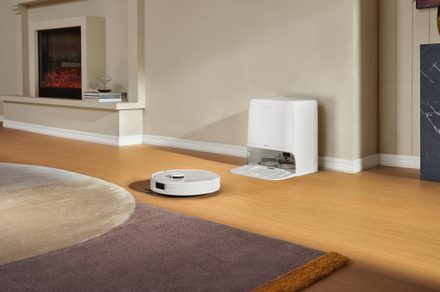
Roborock's latest robot vacuum, the Qrevo 2 Pro, introduces an innovative feature that can autonomously remove its mop before cleaning carpets. This robot vacuum boasts impressive suction power at 25,000Pa, along with automatic mop removal, anti-tangle brushes, and a multifunction dock capable of emptying the dust bin, refilling the water tank, and cleaning the mops.
The Qrevo 2 Pro will be available in the U.S. starting August 28 for $549.99, with a regular price of $799.99. A standout feature is Auto Mop Removal, enabling the robot to deposit its mop at the dock for cleaning and pick it up later. Dedicated carpet modes enhance suction and ensure thorough cleaning, while a DuoDivide main brush and anti-tangle side brush work together to minimize hair tangling.
Roborock claims an impressive 0% hair-tangling rate and 100% hair-removal rate during testing, though effectiveness may vary based on the environment. The robot's edge-cleaning capabilities are facilitated by a reversible side brush that rotates when entering corners, and a FlexiArm mop can extend to within 1.85mm of a wall. The dock also tackles mop maintenance by washing and drying the pads, emptying the dust bin for up to 65 days, and refilling the water tank.
Roborock has explored unique ideas, such as a mechanical arm for the Saros Z70 and a prototype for stair cleaning, but its Qrevo 2 Pro takes a more conventional approach. The robot addresses the messy reality of modern homes, where various types of debris can accumulate unexpectedly. Roborock's No Suction Technology replaces traditional suction with a bionic polymer roller to collect and manage dry and liquid debris, offering a novel approach to cleaning.
Meanwhile, Ring unveiled TAKE, an encryption feature prioritizing privacy over smart features, while Google improved its Google Home by enabling precise color specification through Kelvin values, though accessibility depends on participation in the early access program.
Written by urgent.news from Digital Trends's reporting — not their text. Machine-written — may contain errors; check the original before relying on it.
This story
This is one outlet's version. Read the fullest account.
- The Roborock Saros Z70 robot vacuum and mop with a grabby arm is finally back under $1,000 mashable.com
- I've tested dozens of robot vacuums - this new $599 Roborock has all the features I need zdnet.com
- Roborock’s new robot vacuum is so hands-off, you might forget it’s there androidauthority.com
- The Roborock Qrevo 2 Pro proved robot vacuums aren't the waste of money I thought they were androidpolice.com