Parliamentarians urge government to avoid long-term energy contracts
ISLAMABAD: Parliamentarians and energy experts urged the government to avoid long-term energy contracts that could trap Pakistan in costly take-or-pay obligations and contribute to circular debt, and instead adopt a more flexible approach towards fuel imports amid rapid solarisation. The discussion took place at a dialogue titled ‘The Sun and the Pipeline: Energy Contracts in an Era of Solar…
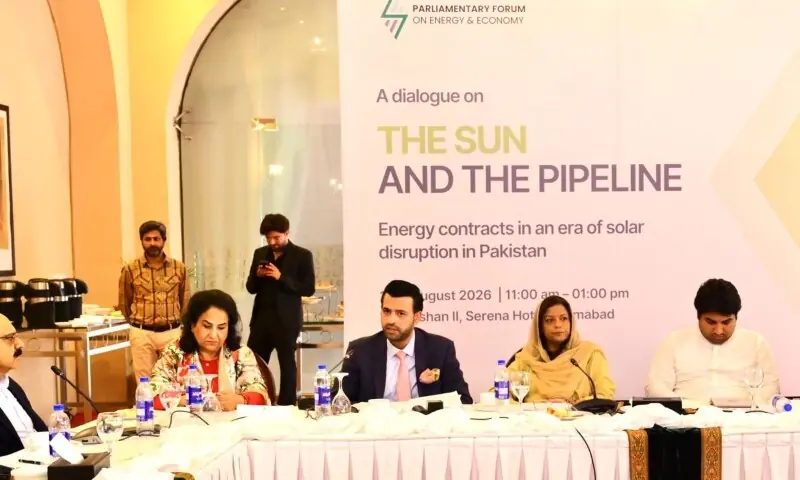
Parliamentarians and energy specialists have called upon the government to refrain from entering long-term energy contracts that could ensnare Pakistan in expensive take-or-pay arrangements and exacerbate the nation's circular debt. Instead, they advocate for a more adaptable approach to fuel imports as the country undergoes a rapid shift towards solar power.
This consensus emerged from a dialogue hosted by the Parliamentary Forum on Energy and Economy, titled "The Sun and the Pipeline: Energy Contracts in an Era of Solar Disruption in Pakistan." The dialogue examined Pakistan's evolving requirements for liquefied natural gas (RLNG), the influence of geopolitical uncertainties and market fluctuations, and policy alternatives to safeguard consumers while preserving energy autonomy.
Dr. Nafisa Shah, the forum's convener, emphasized that Pakistan must reevaluate its energy mix and regulatory structures in light of the swift expansion of solar energy. She stated, "Pakistan has installed approximately 50 GW of solar capacity across rooftops and other sectors. Our energy policies must mirror this new reality and ensure that citizens ultimately gain access to the affordable electricity they have been denied due to long-term contracts that have ensnared us in prohibitively expensive electricity."
MNA Barrister Danyal Chaudhry, secretary of the Parliamentary Forum on Energy and Economy, urged the debate to shift away from viewing solar and gas as competing options. He proposed asking how these two sources, along with the grid and emerging technologies, can collaborate to deliver Pakistan with affordable, dependable, and secure energy.
Muhammad Arif, a former member of gas at Ogra, underscored the necessity of integrating energy governance and devising mechanisms to capitalize on surplus solar generation, especially during high solar output periods. Asim Riaz, an energy advisor at the All-Pakistan Textile Mills Association, clarified that Pakistan's RLNG predicament is now more complex than just securing supply.
He highlighted that the issue encompasses demand, flexibility, affordability, and market design. The sun, according to him, has not eradicated the need for LNG; instead, it has altered the circumstances under which Pakistan requires RLNG, its quantity, and the composition of Pakistan's LNG portfolio.
Energy journalist and founder of Energy Flux, Seb Kennedy, pointed out that Pakistan is undergoing a consumer-driven energy transition at a pace that outstrips the state's planning system. This transition, he argued, is fueled by exorbitant tariffs, erratic supply, and declining solar costs, rather than governmental planning. Huma Chughtai advocated for greater consistency and clarity in policymaking, particularly in comprehending supply, demand, and the broader challenges confronting Pakistan's economic and energy sectors.
She stressed the importance of enhancing the Planning Division's representation in the policy process.
Written by urgent.news from Dawn - Pakistan's reporting — not their text. Machine-written — may contain errors; check the original before relying on it.