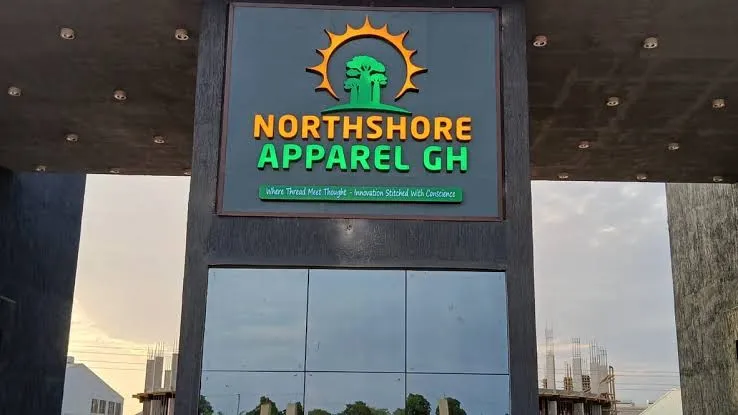
Northshore Apparel shows what 24-hour economy can deliver – Mahama
President John Mahama has cited the Northshore Apparel Hub as an example of how his government’s 24-hour economy initiative is expected to create jobs, increase production and accelerate Ghana’s exports.
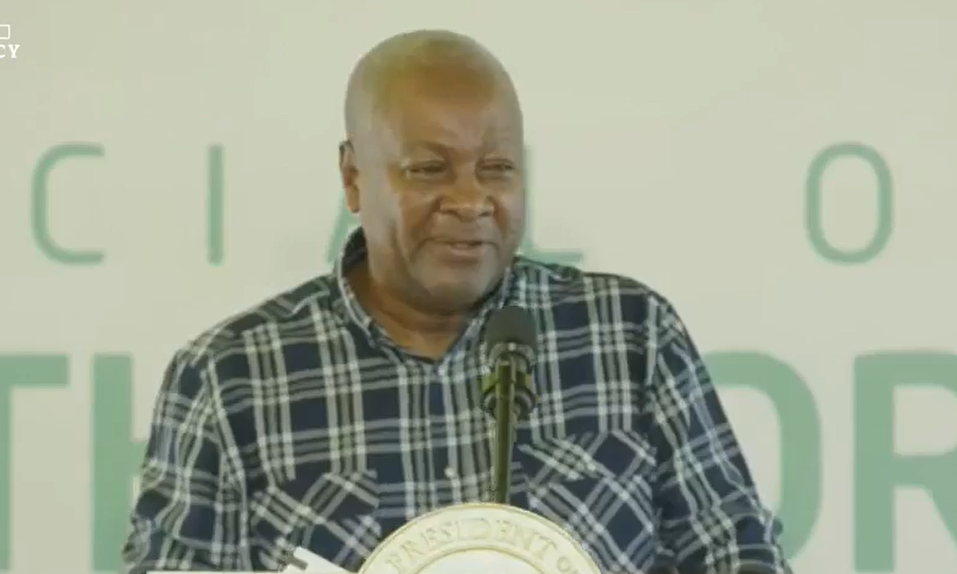
President John Mahama highlighted the Northshore Apparel Hub as a prime illustration of how Ghana's 24-hour economy initiative aims to stimulate job creation, elevate production, and boost the nation's exports. At the hub's inauguration, Mahama emphasized that the company's decision to run various shifts would generate additional employment opportunities for young people while amplifying production for international markets.
"This is a testament to what our 24-hour economy initiative aims to accomplish," Mahama declared. He further explained that the hub would employ additional workers by operating multiple shifts, resulting in heightened production. According to Mahama, the 24-hour economy initiative encompassed a broader trend of factories and businesses anticipated to adopt multiple shifts to attain the initiative's objectives, which are job creation and enhanced export earnings.
"It extends beyond North Shore; numerous other factories are planned to operate various shifts, thereby generating employment prospects for our people," he stated. The 24-hour economy is explicitly designed to attain these two primary goals, according to Mahama. The apparel hub has already made significant strides toward these objectives, having already created at least 2,000 jobs, Mahama noted.
"North Shore has already achieved this, creating at least 2,000 jobs, and the majority of its products will be exported, generating foreign exchange for Ghana," he affirmed. Mahama also underscored that Northshore's participation in the Free Zones program would enable the company to take advantage of incentives available to businesses operating under the program.
"North Shore is registered within the Free Zones, which entitles it to all the incentives that the program provides," he informed. Additionally, Northshore would benefit from lower tax rates for manufacturers located in rural and northern regions of Ghana. The President explained that the existing tax regime offers reduced tax rates for manufacturers establishing operations in rural areas and northern Ghana.
"Not only that, but it will also benefit from tax incentives due to the current tax regime offering reduced tax rates to manufacturers operating in rural areas and the northern part of Ghana," Mahama elucidated. The President hinted at Northshore's intention to embark on a second phase of development, which would allow the company to enjoy further exemptions.
"North Shore has expressed its intention to proceed with a second phase of development, and consequently, in this phase, they will enjoy additional exemptions from duties and taxes that they rightfully deserve," he remarked. Mahama also announced plans to introduce a net-metering framework, enabling companies with solar power plants to supply surplus electricity to the national grid.
He announced that legislation would be proposed to Parliament to establish the system. "In addition, we are poised to pass a net metering bill through Parliament," Mahama declared. Under this proposed system, excess electricity generated by a company's solar plant could be fed into the national grid, with a meter recording the supplied amount.
Companies would then be compensated for the electricity supplied to the grid. Conversely, companies consuming more electricity than they generate would be required to pay the difference. "So, if they produce more than they consume, they will receive payment from NETCO," Mahama clarified. He reiterated that the government intended to introduce the system promptly. "We are set to introduce net metering in Ghana soon," he pronounced.
Written by urgent.news from MyJoyOnline Ghana's reporting — not their text. Machine-written — may contain errors; check the original before relying on it.
This story
This is one outlet's version. Read the fullest account.