New Silk Road: Threat to Dubai, or a billion-dollar opportunity?
Issac John The Silk Road Finance & Technology Forum concluded in Tashkent with a proposition that carries important implications for the UAE: Central Asia wants its historic trade routes transformed into new corridors for money, payments, technology and investment. For a country whose prosperity has been built partly on functioning as the commercial and financial crossroads between East and West,…
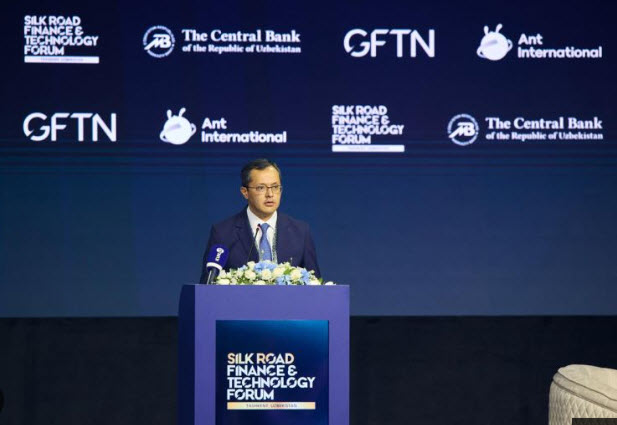
The recent Silk Road Finance & Technology Forum in Tashkent presented a proposition that holds significant implications for the UAE. Central Asia envisions transforming its historic trade routes into new corridors for financial transactions, payments, technology, and investment. This development presents an intriguing question: will the emergence of a new financial Silk Road bypass the UAE, or will it enhance the value of the Emirates?
Uzbekistan's ambitious vision aims to link Central Asian financial systems more closely with the Gulf, China, South Asia, Southeast Asia, and Europe. This integration would involve interoperable payments, digital assets, fintech platforms, investment centers, and ultimately, deeper capital markets. Central Bank Governor Timur Ishmetov emphasized the need for regional financial connectivity, urging international companies to invest, test new solutions, and develop talent in Uzbekistan.
For the UAE, the challenge lies in the potential impact on its traditional role as a commercial and financial crossroads between East and West. If Tashkent establishes efficient connections with China, India, Türkiye, and Europe, some transactions that previously required intermediaries in Dubai might remain within an integrated Eurasian network.
However, viewing the new Silk Road solely as a threat overlooks the UAE's existing strategic position. Uzbekistan has already formed partnerships with over $20 billion worth of projects with Emirati companies by 2025. UAE entities like Masdar, DP World, and various banks have invested heavily in energy, infrastructure, logistics, and finance in Uzbekistan. Moreover, more than 2,300 Uzbek companies operate in the UAE.
The UAE can leverage its expertise to become a significant player in Central Asia's digital finance landscape. Dubai can serve as an international capital-raising and sukuk-listing center for Central Asian issuers, while Abu Dhabi's sovereign investors and asset managers can provide long-term capital. UAE banks can facilitate trade and infrastructure financing, while Emirati fintech companies can participate in cross-border payments, digital banking, and tokenization.
NASDAQ Dubai's $98.6 billion sukuk market and DIFC's nearly 2,000 fintech firms offer substantial depth that Uzbekistan cannot easily replicate.
The greater strategic risk for the UAE would be not participating aggressively enough in the new Silk Road. A successful network could gradually shift the economic center of gravity across Eurasia. However, hubs do not necessarily replace other hubs; instead, they often reinforce each other when capital, logistics, and technology are interconnected.
The opportunity for the UAE is to ensure that Central Asia's connection to the world still includes a substantial portion routed through Dubai and Abu Dhabi. In this way, Tashkent could become Dubai's gateway to a larger Eurasian hinterland, rather than a competitor to the UAE's economic hub.
Written by urgent.news from Arabian Post's reporting — not their text. Machine-written — may contain errors; check the original before relying on it.