New coins honour Charlotte Maxeke and women who shaped SA’s freedom Struggle
The South African Reserve Bank has launched two commemorative circulation coins honouring Charlotte Maxeke and the women of the 1956 Women’s March. The R2 coins mark 125 years since Maxeke became the first Black South African woman to earn a university degree and 70 years since the historic anti pass law protest in Pretoria.
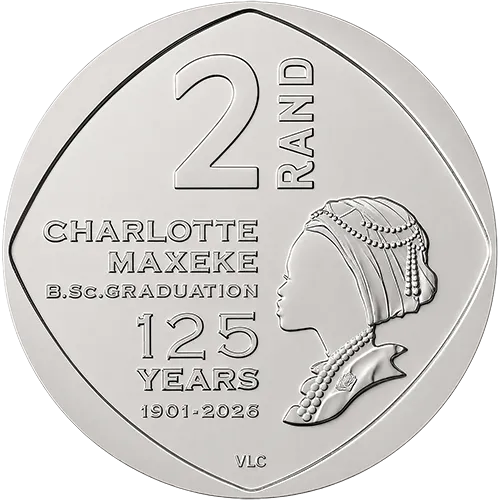
Two commemorative coins have been introduced by the South African Reserve Bank to honor women who played pivotal roles in South Africa's freedom struggle. The first coin marks the 125th anniversary of Charlotte Maxeke becoming the first Black South African woman to earn a university degree in 1901. Maxeke achieved this feat despite facing significant racial, social, economic, and cultural barriers.
Her education, however, was not just an academic milestone; it was a powerful act of defiance against the limitations imposed on black women at the time. The second coin commemorates the 70th anniversary of the historic 1956 Women's March, where over 20,000 women marched on the Union Buildings to protest against apartheid pass laws.
This march remains one of the defining moments in South Africa's liberation history, highlighting women's crucial role in resistance movements. The South African Reserve Bank's Governor, Lesetja Kganyago, emphasized that currency carries public meaning and serves as a way for a nation to represent its values and remember its history.
He highlighted how Maxeke's achievement went beyond personal success, as she used her education to serve others and mobilize African women against pass laws, laying the groundwork for future resistance. Minister of Women, Youth, and Persons with Disabilities, Sindisiwe Chikunga, praised the coins for recognizing women whose contributions to the liberation struggle have often been overlooked.
She stressed that women played a central role in organizing communities, sustaining families, and making immeasurable contributions to the struggle, despite facing racial and gender discrimination. Chikunga commended the bravery of women like Lilian Ngoyi, Helen Joseph, Rahima Moosa, Lillian Diedericks, and Sophia Williams-De Bruyn, whose activism transformed ordinary women into a formidable political force.
Gender justice advocate Mbuyiselo Botha further highlighted that these women challenged not only apartheid but also patriarchy and the patriarchal structures that limited women's voices. While the coins symbolically acknowledge the women's resistance, Botha called for continued action to address ongoing gender inequalities, such as disparities in pay and representation.
Written by urgent.news from IOL's reporting — not their text. Machine-written — may contain errors; check the original before relying on it.