Morgendliche Mondfinsternis: Wolken nehmen Sicht auf partielle Mondfinsternis
Nach Sonnenfinsternis und Sternschnuppen bietet der August ein weiteres Himmelsschauspiel. Doch Frühaufsteher werden enttäuscht: Das Wetter spielt nicht mit.
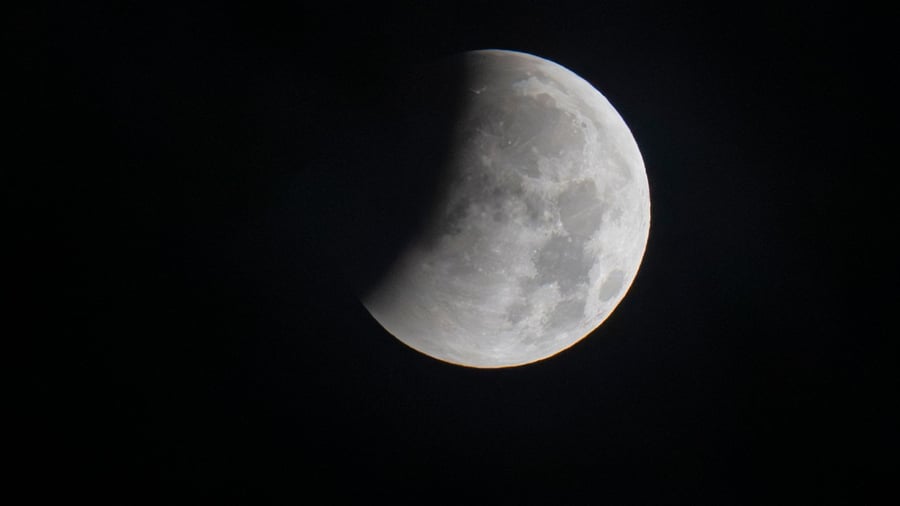
A partial lunar eclipse occurred in Germany in the morning. Early risers needed to catch the celestial show, with the Earth's shadow entering at 4:34 AM. However, unfavorable weather conditions played a role. Dense clouds obstructed the view, according to the German Weather Service (DWD). The forecast was not optimistic, as western clouds, gusts, and thunderstorms moved in.
Consequently, most people likely missed the partial lunar eclipse due to the relatively thick cloud cover over Germany, said DWD meteorologist Martin Jonas. "There were some strong thunderstorms as well, and in that sense, it was indeed true that people weren't able to see it." While there were a few cloud gaps in the south and central Germany, overall, the chances of witnessing the lunar eclipse were relatively slim.
A dpa reporter noted that the moon was visible in eastern Brandenburg just before the partial eclipse began, but the clouds thickened, eventually hiding the moon. If the skies had been clearer or there was a cloud gap, the partial eclipse, which occurred shortly after 5:00 AM, would have been well visible against a dark night sky.
With good visibility or a cloud gap, the partial eclipse would have been best seen around 5:30 AM, when the moon was high in the sky, as the German Astronomical Society had previously reported from their base in Bensheim, Bavaria. As the moon darkened, the dawn set in. The Earth's shadow would leave the moon at 7:52 AM, after the moon had already set.
Other parts of the world had better viewing opportunities, with photos from the USA, Bolivia, and Rome capturing the spectacular sight. However, similar celestial events are expected to happen in Germany in the coming years. A partial lunar eclipse will occur in the night of February 21, 2024. During this type of eclipse, the moon does not enter the Earth's shadow but only casts a faint shadow. A total lunar eclipse is expected again on December 31, 2028.
Written by urgent.news from Handelsblatt's reporting — not their text. Machine-written — may contain errors; check the original before relying on it.