Meet Jacinto Canek, the Maya rebel who rose against Spanish rule in Yucatán
Nearly half a century before the Mexican War of Independence, Jacinto Canek led an anti-colonial Maya uprising against the Spanish in the state of Yucatán, writes Andrea Fischer. The post Meet Jacinto Canek, the Maya rebel who rose against Spanish rule in Yucatán appeared first on Mexico News Daily
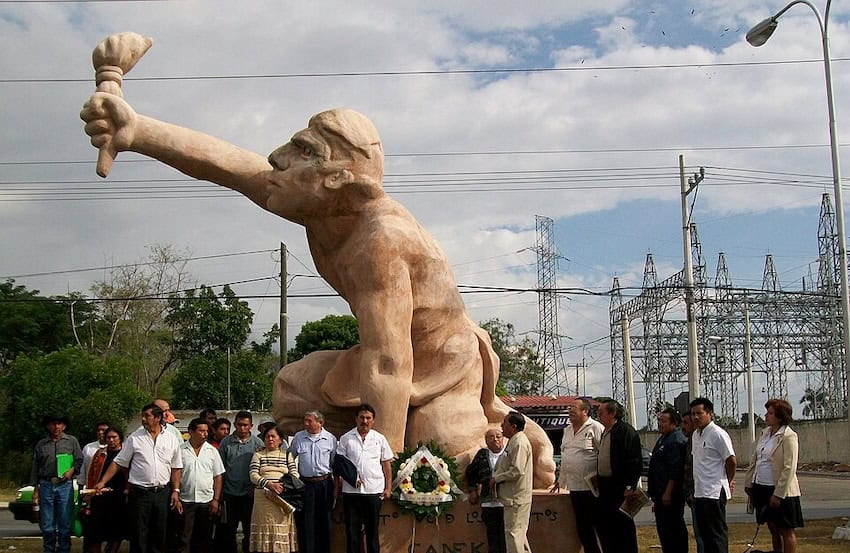
In the early 18th century, the people of Cisteil in present-day Yucatán felt the oppressive weight of Spanish rule. This small town, despite its modest size, was home to a passionate population yearning for liberation. It wouldn't be long before Jacinto Canek, a Maya man, would emerge as their leader in a major anti-colonial uprising.
Born around 1731 in the southeastern state of Campeche, little is known about Canek's early life. He received an education in Latin, history, and Christian doctrine at the Convento Grande in Mérida, but was expelled for his rebellious nature. Canek, however, was well-versed in Christian doctrine and practiced traditional Maya medicine passed down through oral tradition.
Upon his return to San Francisco de Campeche, Canek proclaimed himself as the king of the movement to reclaim political and religious dominance in the Yucatán Maya. Thousands of Indigenous people acknowledged his authority and saw him as a manifestation of Kukulkán, the sacred serpent of the Maya pantheon.
The revolution pursued a goal of reviving Maya culture after centuries of colonial influence, with revolutionaries believing in the eventual overthrow of Spanish rule. Jacinto Canek, a figure embodying the man-god myth of Mesoamerican tradition, combined the syncretic Maya-Christian identity of Jesus Christ and Kukulkán.
In 1761, Spanish authorities arrested Canek and others, executing him in Mérida by breaking his limbs with iron bars. His body was subsequently burned. The Spanish attempted to discredit the rebels by portraying the event as a drunken riot. However, the Maya viewed it as a noble uprising against colonial exploitation, and Canek remains an enduring symbol of resistance in Yucatecan history.
Written by urgent.news from Mexico News Daily's reporting — not their text. Machine-written — may contain errors; check the original before relying on it.