KNUST researchers push for renewable energy-driven entrepreneurship and development
Prof. Francis Kemausuor, Dean of the Faculty of Mechanical and Chemical Engineering at KNUST, says research being undertaken by the University is already demonstrating what is possible when energy is connected to productive activities.
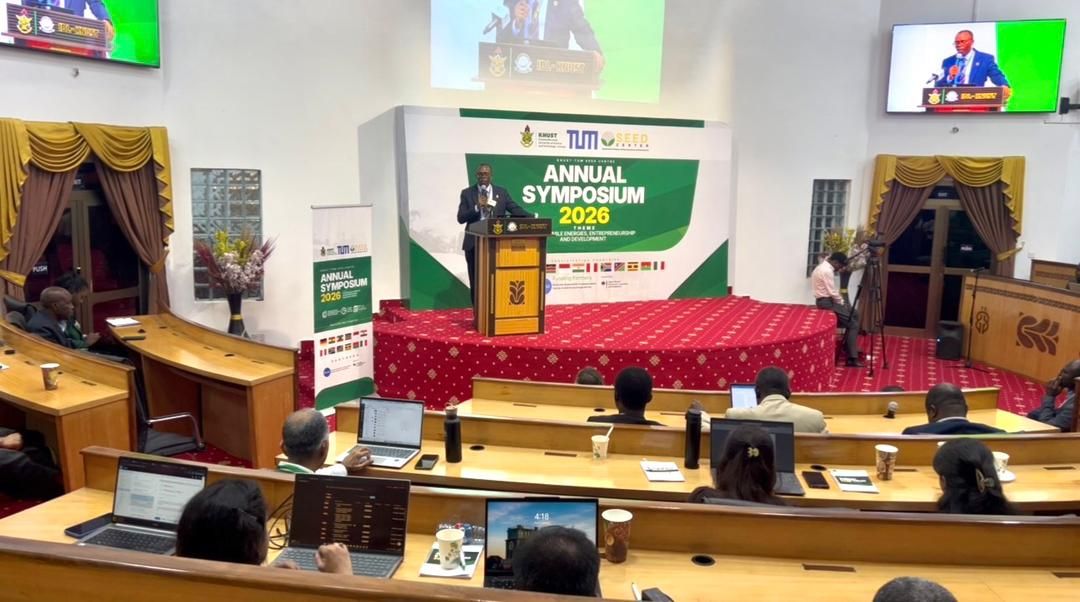
The conversation surrounding renewable energy is evolving beyond merely providing electricity access to discovering ways of transforming that energy into economic opportunities. At the Annual Symposium 2026 held at the KNUST, researchers and industry stakeholders delved into how sustainable energy can support entrepreneurship and tackle everyday challenges faced by communities.
Prof. Francis Kemausuor, Dean of the Faculty of Mechanical and Chemical Engineering at KNUST, highlighted ongoing research demonstrating the potential of energy connected to productive activities. He mentioned that their team has been conducting research projects that utilize energy for income generation. For instance, they have set up a solar mini-grid system in a village named Yeboahkrom, aiding locals in using freezers to offer cold beverages, fish, and meat to their community.
Additionally, they have installed a water system for the village, which previously lacked access to clean water. This system utilizes a solar mini-grid to pump water into an overhead storage tank, providing the villagers with a reliable source of drinking water. Prof. Kemausuor emphasized that such projects highlight how renewable energy can serve as a catalyst for local enterprises and income generation.
The potential applications of renewable energy extend well beyond rural communities, he added. Solar energy is currently being used to power traffic lights at various locations around the KNUST campus. Engineers like Seth Mahu are eager to engage the Minister for Energy and Green Transition, exploring potential collaborations with the KNUST team to implement solar-powered solutions for traffic issues in the country.
Mahu believes that academic-industry partnerships can demonstrate the value of integrating research findings into practical applications. During the symposium, the focus was placed on developing renewable energy solutions that not only support economic activities within communities but also power critical public infrastructure. Experts emphasized that Ghana's potential lies in effectively investing in and deploying existing renewable energy technologies to maximize their benefits.
Written by urgent.news from 3News's reporting — not their text. Machine-written — may contain errors; check the original before relying on it.