Knowledge Nugget | CosmoCube : How a tiny satellite could reveal the early universe
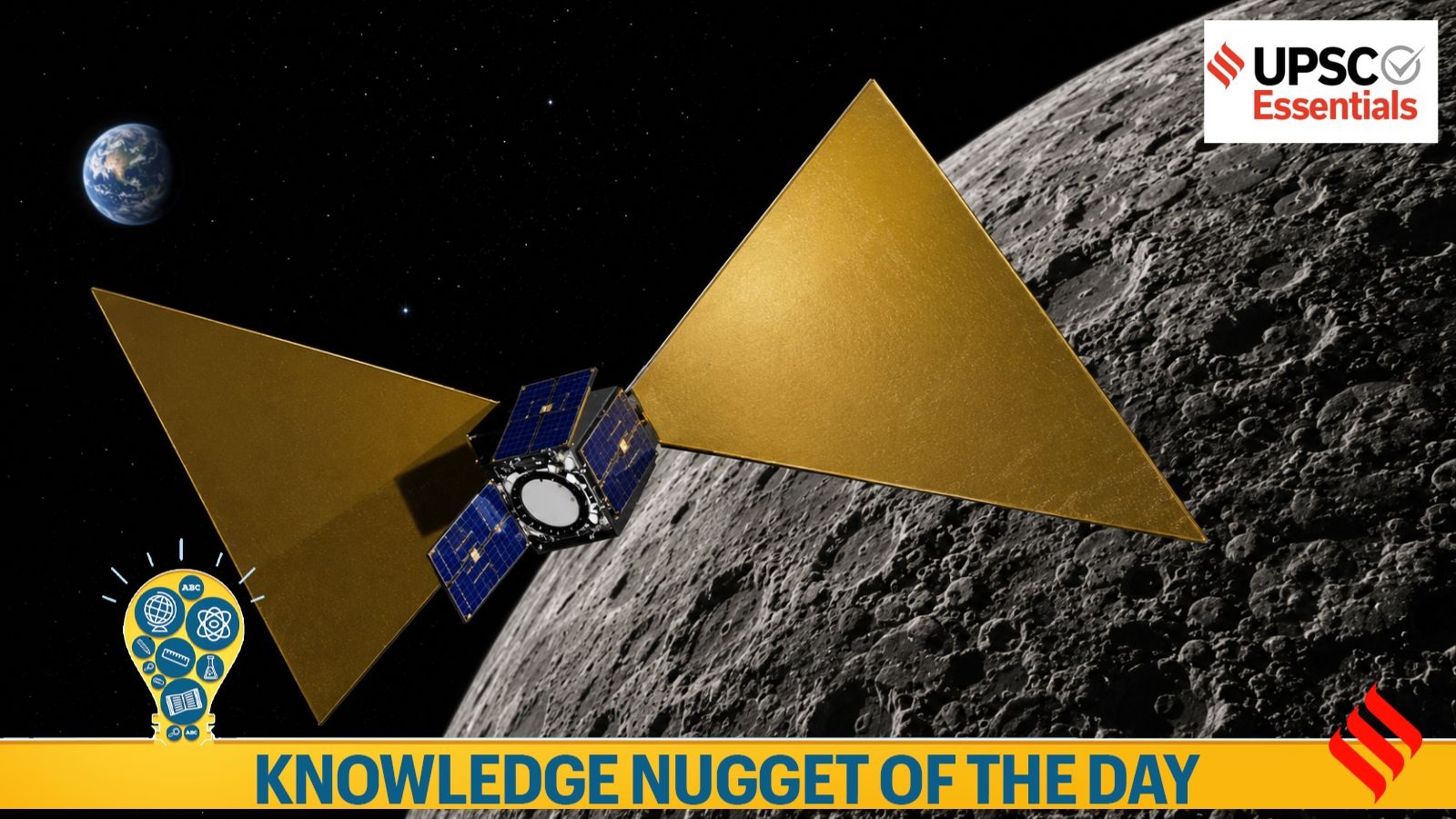
A proposed satellite the size of a briefcase, known as CosmoCube, could provide astronomers with a new method for examining the very early stages of the universe. This mission, which would position the spacecraft near the Moon, aims to listen for faint radio signals from more than 13.5 billion years ago. The key benefits include:
1. CosmoCube would utilize the lunar far side as a natural barrier against Earth-based radio interference.
2. Studying this period between the Big Bang and the emergence of the first stars is currently challenging.
3. The satellite would spend about 40 minutes on the far side during each two-hour orbit.
4. Over a two-year mission, the spacecraft could accumulate approximately 1,000 hours of data at extremely low radio frequencies.
5. This information could offer a clearer understanding of the cosmic dark age and the transition leading to the formation of the first stars and galaxies.
The early universe is notoriously difficult to observe due to the "cosmic dark age," a period lasting roughly 150 million years after the Big Bang when there were no stars yet, but the universe was filled with hydrogen. This hydrogen produced a faint radio signal known as the 21-centimeter line, which carries valuable information about conditions in the early universe.
However, detecting this signal from Earth is extremely difficult due to Earth's ionosphere blocking the relevant low-frequency radio waves, as well as human-made signals from FM radio, telecommunications systems, and satellites that further overload the extremely faint cosmic signal. Consequently, there is a significant gap in our understanding of the universe's early history.
Written by urgent.news from The Indian Express's reporting — not their text. Machine-written — may contain errors; check the original before relying on it.