KAIST unveils homegrown AI model for predicting protein structures, drug binding
Researchers at the Korea Advanced Institute of Science and Technology (KAIST) said Friday they have developed a biomolecular artificial intelligence (AI) model, called K-Fold, that predicts protein structures and how drug candidates bind to them, with the aim of speeding up new drug development using homegrown technology. The model was built by a KAIST-led group called Team KAIST as part of a…
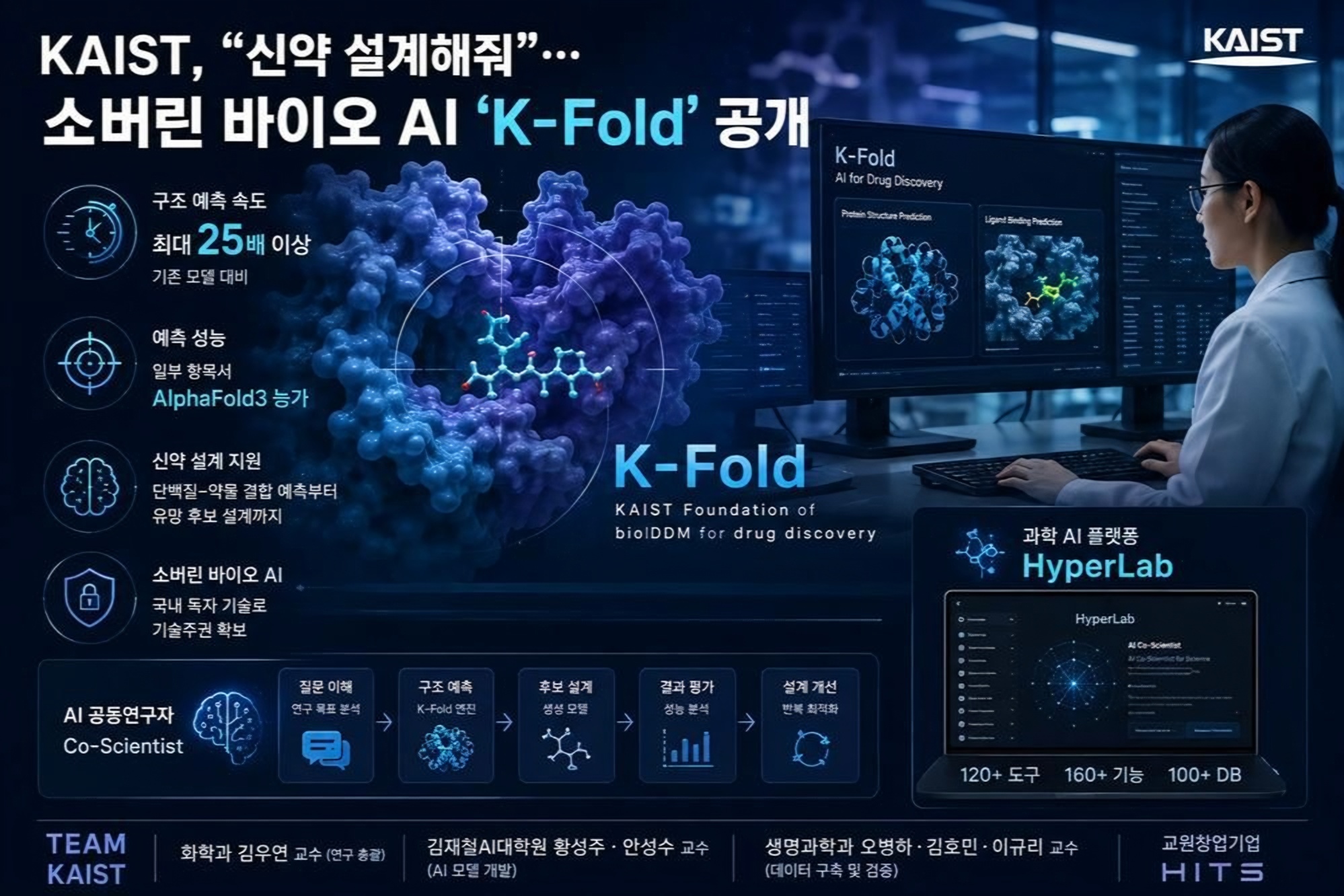
The Korea Advanced Institute of Science and Technology (KAIST) has unveiled a homegrown AI model called K-Fold, designed to predict protein structures and drug binding, with the goal of accelerating new drug development through domestic technology. Developed by a KAIST-led team as part of a project by Korea's Ministry of Science and ICT, the model aims to boost the nation's competitiveness in the AI era by achieving "sovereign AI" capabilities.
President Bae Chung-sik of KAIST highlighted the significance of the project in advancing Korea's core technology. Unlike conventional AI models, K-Fold is uniquely positioned to predict both the 3D shape of a single protein and its interaction with other proteins, drug candidates, or genetic material like DNA and RNA. This dual capability of structure prediction and binding prediction is crucial in early-stage drug discovery, where researchers must identify disease-related proteins and their interactions to develop potential treatments.
Written by urgent.news from The Korea Times's reporting — not their text. Machine-written — may contain errors; check the original before relying on it.