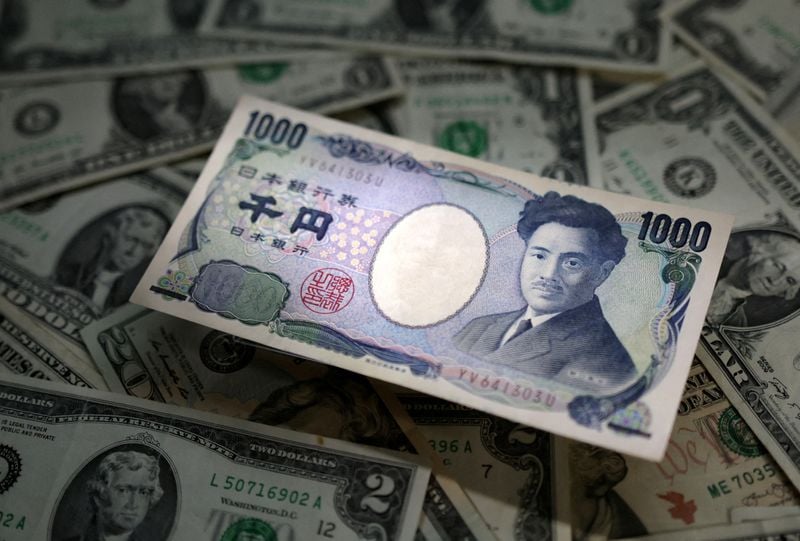
Japan spent record $96.5 billion to support yen over past month, ministry data shows
Japanese authorities spent a record 15.4 trillion yen ($96.5 billion) on foreign exchange market interventions over the past month to bolster the domestic currency, according to Ministry data released on Friday. This unprecedented level of intervention reflects Japan's determination to move away from its four-decade low against the U.S. dollar, which threatens profits for major exporters and raises import costs, particularly for energy.
Over 95 percent of Japan's energy imports come from the Middle East, leaving the nation vulnerable to supply disruptions due to the ongoing conflict in Iran.
Despite the Bank of Japan's (BOJ) relatively moderate approach to policy tightening, the yen's value has remained low compared to major economies like the United States, encouraging investors to fund global transactions with cheap yen. The BOJ maintained its interest rates steady during its last meeting in July, and while policymakers have hinted at increased tightening, markets currently assign a 65 percent probability of a rate hike at the next meeting in September.
The BOJ began intervening in the foreign exchange market on July 30 and July 31, including an unusual joint action with the U.S., as the Japanese currency hit its weakest levels in 40 years, trading near 164 per dollar. South Korea also joined the intervention to maximize its impact. Earlier this month, BOJ data revealed that the intervention on July 30 could have been as high as 9.6 trillion yen, surpassing the current daily record of 6.3 trillion yen set on April 30.
The yen's strength climbed from around 163 per dollar to a peak of 155.20 on August 3 before stabilizing around 159.50 since August 10.
To demonstrate Japan's willingness to engage in large-scale interventions, the U.S. has assured Tokyo that it will use a COVID-era Federal Reserve backstop for major central banks to provide additional dollar liquidity without selling U.S. Treasury securities. U.S. Treasury Secretary Scott Bessent emphasized that Washington will take whatever measures are necessary to support Tokyo's efforts to stabilize the yen, warning that its undervaluation could lead to other economic problems or competitive devaluations of other currencies.
Written by urgent.news from Channel News Asia's reporting — not their text. Machine-written — may contain errors; check the original before relying on it.
This story
This is one outlet's version. Read the fullest account.
- Japan spent record $96.5 billion to support yen over past month, ministry data shows investing.com
- Japan spent record $96.5 billion to support yen over past month, ministry data shows finance.yahoo.com
- Japan spent record $96.5 billion to support yen over past month, ministry data shows channelnewsasia.com