Iran urges other nations not to join new US sanctions, mediators focus on reopening strait
DUBAI: Iran condemned the United States’ new economic sanctions on Friday as “state terrorism” and said other countries were legally obliged not to implement them. The Iranian foreign ministry’s statement came as mediators stepped up efforts to reopen the Strait of Hormuz , which handled 20% of world oil supplies before the war began six months ago and whose status remains the biggest obstacle to…
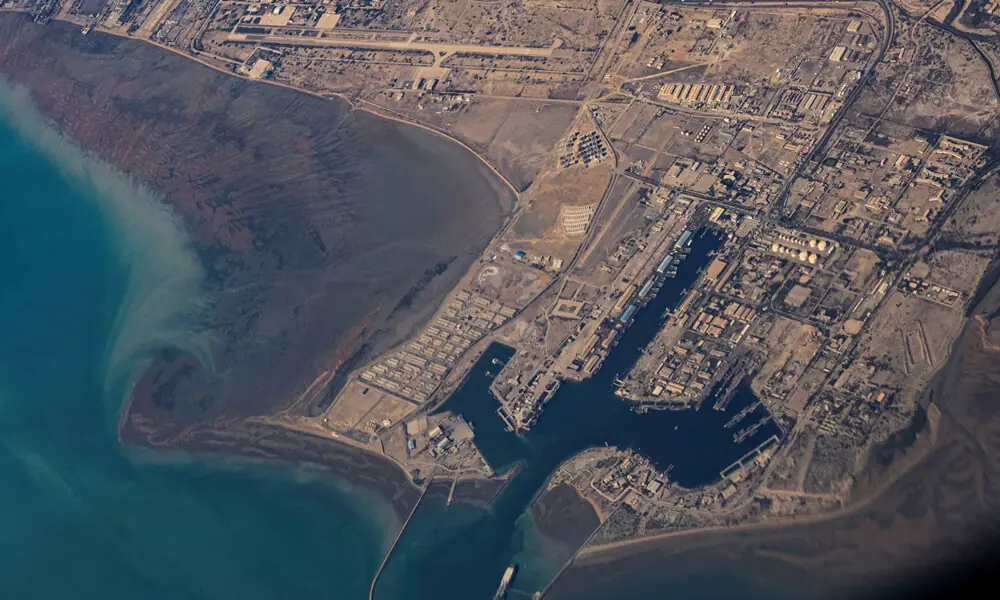
Iran has denounced the United States' recent economic sanctions as "state terrorism", asserting that other nations are legally prohibited from enacting them. The statement was made by Iran's foreign ministry amid heightened efforts to restore the Strait of Hormuz, a crucial pathway for 20% of global oil supplies that has been a major hurdle to a peace agreement since the war began six months ago.
During this period, President Trump's administration warned countries to distance themselves from Iran or face secondary sanctions, though the Treasury Department merely postponed imposing penalties. Trump further emphasized that the U.S. was not engaged in dialogue with Iran, while the White House insisted that the economic campaign would persist until Tehran engaged in "meaningful" discussions.
Iran's foreign ministry emphasized that all countries are bound by international law to abstain from implementing U.S. sanctions against Tehran, asserting that participating in these measures equates to endorsing one state's unlawful authority over independent nations. They labeled the new U.S. measures as a "crime against humanity," threatening the well-being and livelihood of millions of civilians and urging other entities, including the United Nations, to uphold the rule of law.
Efforts to revive diplomatic engagements aimed at ending the conflict have intensified. Qatar's Prime Minister, Sheikh Mohammed bin Abdulrahman Al Thani, highlighted the necessity of returning to the pre-war conditions of unrestricted shipping through the Strait of Hormuz during his discussions with Iranian officials in Tehran on Thursday.
Iranian Foreign Minister Abbas Araqchi described these talks as "creative" and reiterated his appeal to the U.S. to cease military and economic pressure on Iran and to resume negotiations. Araqchi emphasized that diplomacy is not impossible, provided the U.S. acknowledges the fact that pressure is ineffective.
In anticipation of reopening the Strait of Hormuz, Iran is reportedly preparing a list of conditions. Secretary of Iran’s Supreme National Security Council, Mohsen Rezaei, stated that Iran has agreed with Oman on a shipping corridor through the strait, with segments of the route situated in both Omani and Iranian waters. Ships would utilize a designated central channel if the U.S. complies with Iran’s demands.
Rezaei previously mentioned that Iran's prerequisites encompass an end to the U.S. blockade on Iranian ports, compensations, and the removal of sanctions. Nevertheless, the feasibility of Iran revising these demands to suit Washington's interests remains uncertain.
U.S. military leaders reported that American forces have cleared sea mines from the strait, which had been laid months earlier by Iran’s Islamic Revolutionary Guard Corps. Admiral Brad Cooper, the commander of the U.S. military’s Central Command, affirmed that international shipping lanes are now open, describing the momentum as building.
According to Cooper, American forces have facilitated the transit of 1,500 commercial vessels carrying nearly 750 million barrels of crude oil through the strait. Despite Trump's repeated assurances that the strait remains open, many vessels have hesitated to navigate through it due to Iranian threats, leading to reduced shipping activity estimated at 5% to 15% of normal volumes.
However, Gulf energy exporters are concurrently striving to diminish their dependence on the strait by investing heavily in new infrastructure, including energy pipelines and ports in the UAE’s Red Sea and UAE eastern coast. Despite these investments, oil prices remained steady on Friday, with analysts projecting a weekly decline, as indications suggest increased oil flow through the strait despite the ongoing diplomatic impasse and the growing adaptability of producers to the evolving circumstances in the Gulf region.
Written by urgent.news from Business Recorder's reporting — not their text. Machine-written — may contain errors; check the original before relying on it.
This story
This is one outlet's version. Read the fullest account.
- Iran urges countries to reject US sanctions dailytimes.com.pk
- Iran urges other nations not to join new US sanctions, mediators focus on reopening strait al-monitor.com