India has 7,500 Himalayan glacial lakes, 200 are high risk amid flood fears
Nepal's alarming glacial lake outburst flood serves as a wake-up call for India, which is home to about 200 vulnerable glacial lakes in the Himalayas. The GLOF incident in Sikkim resulted in severe damage, highlighting the urgency of proactive measures. In response, the Indian government has launched a National GLOF Risk Mitigation Programme focused on thorough assessments, continuous monitoring,…
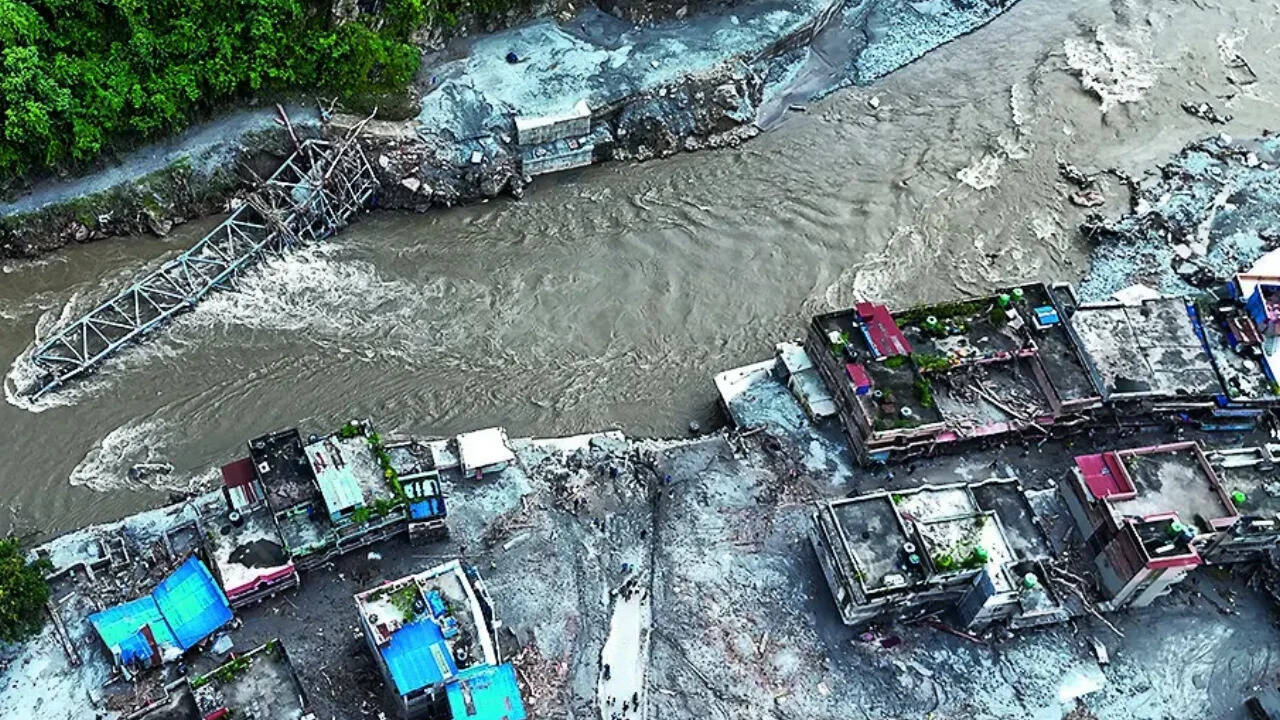
NEW DELHI - The recent Glacial Lake Outburst Flood (GLOF) disaster in Nepal has reignited discussions around India's preparedness and strategy for mitigating similar risks in the Himalayan regions, where an estimated 200 glacial lakes are deemed high-risk. According to government surveys, the Himalayas are home to a staggering 7,500 glacial lakes, with a significant concentration of 10% in Sikkim, of which 25 are categorized as very high-risk.
Notably, 4,700 of these lakes are situated within the Ganga river basin, covering an expansive catchment area of over 2.5 lakh square kilometers, which could lead to catastrophic consequences should a single lake breach occur.
The devastating impact of such disasters was starkly illustrated in October 2023, when a sudden collapse of glacial rocks in South Lhonak Lake in Sikkim unleashed a 20-meter high displacement wave. This wave wreaked havoc, destroying hydroelectric power assets and settlements in its path, demonstrating the tremendous potential for rapid and devastating flooding.
Krishna Vatsa, a member of the National Disaster Management Authority (NDMA), highlighted that the Nepal incident underscores the complexity of Himalayan disaster risks, although the exact sequence of events remains under scientific scrutiny. These events represent cascading hazards, where an initial ice or rock failure can rapidly transform into a debris flow, create a temporary lake, and subsequently generate a flash flood.
Such catastrophic events can develop with minimal warning time, posing significant challenges for timely response and mitigation efforts.
In response to the Sikkim disaster, India's National GLOF Risk Mitigation Programme has identified 195 at-risk glacial lakes, following five key priorities: assessment, monitoring, early warning, mitigation, and community awareness initiatives. However, to effectively address this growing threat, the program must be expedited and scaled up to ensure national security.
The Centre has established a high-level coordination committee on GLOF disaster risk reduction, led by PM's principal secretary PK Mishra, to facilitate multi-agency discussions, surveys of glacial lakes, and identification of high-risk sites. The government has allocated Rs 150 crore for the National GLOF Risk Mitigation Programme aimed at four Himalayan states with high-risk glacial lakes.
The coordination committee held its first meeting in November 2024, with a focus on an integrated approach covering assessment, monitoring, and mitigation strategies. These efforts have involved regular meetings and collaborative strategies between state and central government agencies, though follow-up actions have yet to be fully documented.
Written by urgent.news from Times of India's reporting — not their text. Machine-written — may contain errors; check the original before relying on it.