How typhoons and extreme weather could undermine Taiwan Strait combat readiness
The record heat and extreme weather seen across East Asia this summer have prompted warnings that climate change will be an increasing challenge for military planners focused on potential flashpoints such as the Taiwan Strait. Besides the risks to both troops and equipment, typhoons and other storms could also damage critical infrastructure and disrupt training, as well as divert personnel and…
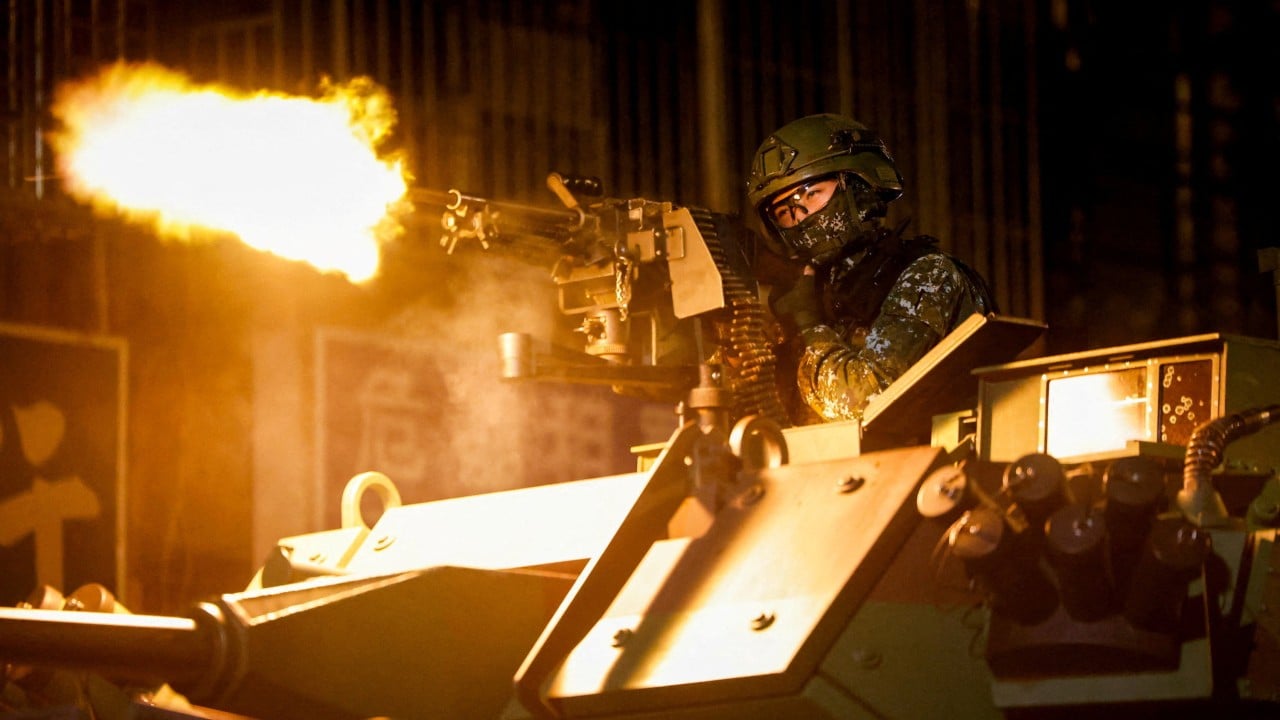
Intense heatwaves and extreme weather conditions across East Asia this summer have raised concerns that climate change will pose growing challenges for military readiness, especially in the Taiwan Strait. Beyond the risks to personnel and equipment, storms can damage vital infrastructure, disrupt training exercises, and divert resources to emergency response efforts. While armed forces can adapt to these challenges in peacetime, wartime operations may be more vulnerable to the direct impact of extreme weather.
Both Japan and the United States have recognized the need to factor climate risks into their assessments of military readiness, bases, equipment, and supply chains. Taiwan has also integrated climate-related disasters into its mobilization and resilience plans. Meanwhile, mainland China has focused on tactical adaptations, testing the effects of extreme heat on its forces.
For instance, a People's Armed Police unit in Guangxi province pushed drones to their limits in high temperatures, while a PLA Air Force unit examined how personnel and equipment performed in extreme conditions and developed specialized maintenance procedures.
Recent typhoons have already disrupted military exercises in the region. Typhoon Dolphin hit Okinawa as US forces at Kadena Air Base were conducting a readiness exercise, forcing personnel to prepare helicopters and tankers for the storm while maintaining the exercise. A series of typhoons struck mainland China earlier this month, causing widespread flooding and prompting the People's Liberation Army to send personnel and equipment to relief efforts.
Typhoons have also repeatedly interrupted Taiwan's annual Han Kuang exercises, forcing cancellations or premature halts in 2023, 2024, and 2025.
Extreme conditions also affect both military personnel and unmanned systems, which are increasingly important in modern warfare. The US Army Research Institute of Environmental Medicine found that heat stress can impair cognitive functions such as attention and memory. Michael Bosack, director of the Parley Policy Institute, emphasized that planners must account for different conditions when selecting equipment, particularly for unmanned systems that are susceptible to extreme temperatures and high winds.
Severe weather could further complicate large-scale operations, such as an invasion of Taiwan. A Chinese study published in 2020 found significant increases in wind speeds and wave heights in the Taiwan Strait over the past three decades. While improvements in PLA capabilities may mitigate some of these seasonal constraints, they do not eliminate the physical challenges.
Christopher Sharman, director of the China Maritime Studies Institute at the US Naval War College, noted that PLA amphibious forces are working to improve their ability to operate in poor weather, at night, and under degraded conditions. Nevertheless, experts warn that while enhanced capabilities may expand the weather window, they cannot eliminate it entirely.
Written by urgent.news from Reuters Business via SCMP's reporting — not their text. Machine-written — may contain errors; check the original before relying on it.
This story
This is one outlet's version. Read the fullest account.