How an escaped convict spent decades living with Indigenous Australians
Perhaps you're familiar with the phrase "Buckley's chance". Well, it's thought that it originates from William Buckley, a man who defied all odds to escape his fate as a convict.
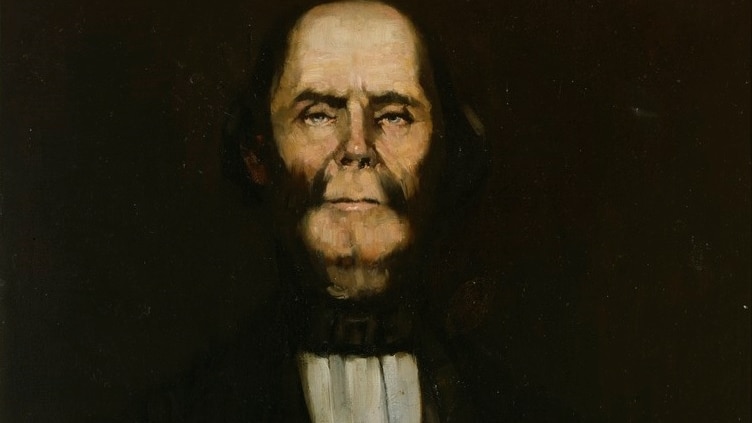
In 1835, a man named William Buckley stumbled into a camp of British colonizers and their Indigenous Eora guides near Djilang (Geelong). The terrified settlers recognized a tattoo on Buckley's skin, which helped them understand his name - William Buckley. Buckley, a convict who had escaped from a settlement in Bullanatoolong (Sorrento) in 1804, had spent the previous three decades living among the Wathaurong Indigenous people, defying all odds and largely forgetting his English language.
As an escaped convict, Buckley was treated with suspicion by the British colonizers and could not return to his former Wathaurong community.
Born in 1780 in Cheshire, England, Buckley worked as a bricklayer and soldier before being convicted of burglary and sentenced to transportation to Australia in 1803. Upon arrival, he and several other convicts escaped, believing Sydney was within walking distance. However, they ended up on the wrong side of Port Phillip Bay, where fresh water and arable land were scarce. After forming a group of fellow escapees, Buckley chose to live independently in the wilderness.
After months of hunger and injury, a pair of Wathaurong women rescued Buckley and introduced him to their society. The Wathaurong taught him their language, hunting, fishing, and food-gathering skills. Buckley lived on the outskirts of their community, adopting a few others into their kin group. He became a valuable source of intelligence about British colonizers and smallpox epidemics, as the Wathaurong had only recently experienced contact with them.
In 1835, Buckley returned to the British and informed John Wedge, an early settler, of a planned attack on his camp.
Written by urgent.news from ABC News AU's reporting — not their text. Machine-written — may contain errors; check the original before relying on it.