Historical Pollution, Not Current Industrial Emissions, Damaged the World's Largest and Oldest Collection of Ancient Rock Art, Study Suggests
Researchers say that past exposure to sulfur dioxide is likely to blame for the increased porosity of the Murujuga rock art created by the Ngarda-Ngarli people tens of thousands of years ago
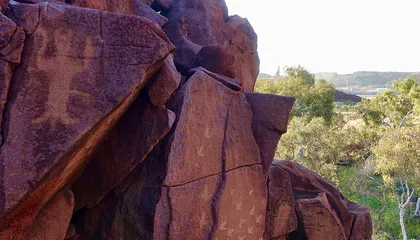
The world's largest and oldest collection of ancient rock art in Western Australia, spanning tens of thousands of years, has been damaged by historical pollution rather than current industrial emissions, according to a new study. Researchers from Curtin University and Aboriginal community members conducted a three-year investigation, the Murujuga Rock Art Monitoring Program, focused on the petroglyphs scattered across the Burrup Peninsula and the Dampier Archipelago.
The rock engravings, created by the Ngarda-Ngarli people, depict various cultural practices and rituals. Despite being added to the UNESCO World Heritage List in 2025 for its cultural and spiritual significance, the rock art's deterioration was primarily due to historical sulfur dioxide emissions from industrial facilities, which declined significantly in the 1970s and 1980s.
The study found that porosity, a sign of deterioration, was higher near industrial areas in the past but is now lower, indicating that current industrial activity is not accelerating the damage. The findings suggest that industry and the rock art can coexist if air quality is carefully monitored and emissions stay within established limits.
Written by urgent.news from Smithsonian's reporting — not their text. Machine-written — may contain errors; check the original before relying on it.