Gebrauchtwagen-Check: Ausgestorben, aber fit: Der Ford C-Max II beim TÜV
Variabler Innenraum, Platz für bis zu sieben Leute: Praktisch ist der C-Max II, der als Gebrauchtwagen mindestens sieben Jahre alt ist - und dabei noch erfreulich rüstig. Worauf Käufer achten sollten.
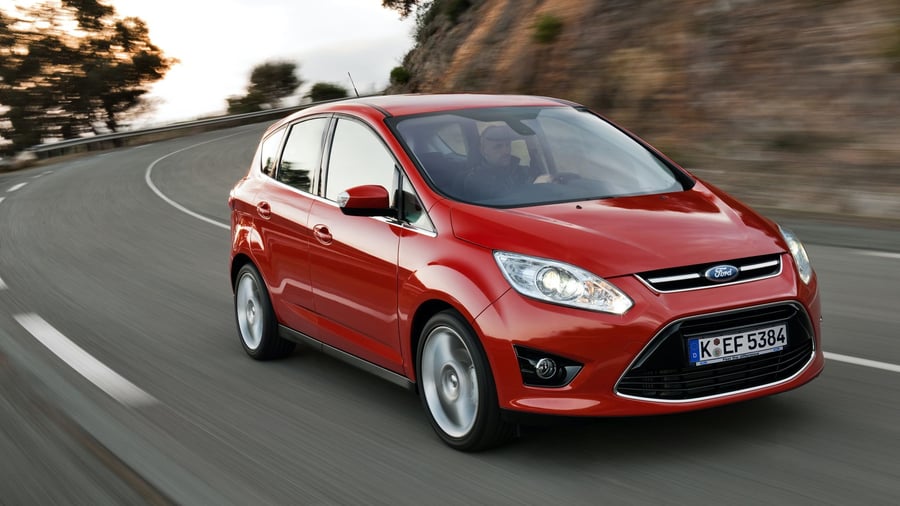
The German market has become increasingly dominated by SUVs in recent years, with compact vans like the Ford C-Max II becoming increasingly rare. Despite their decline, the C-Max II has remained remarkably reliable, with many still running smoothly after seven years on the road. Ford stopped producing the C-Max II in 2019, making it a relatively rare sight on German roads today.
The recent used C-Max II cars have traveled seven years since their last major inspection. While they perform well in the TÜV main inspection, their high mileage takes a toll. The C-Max II is essentially a larger version of the Focus, offering more space and a higher seating position compared to the compact van. There is also a long version, the Grand C-Max, with rear sliding doors and seating for up to seven people.
A plug-in hybrid version, named "Energi," was also available in limited numbers. The C-Max II has received praise in the TÜV inspection for its suspension and steering systems, which are stable and responsive. Brake lines are particularly well-regarded. However, there are some weaknesses, such as issues with the wheel axle and lighting.
Brake hoses tend to degrade over time, especially in vehicles aged 10 to 13 years. Oil leaks are also a concern, and older models often have problems with exhaust systems. The exhaust inspection (AU) fails for models across all generations. The ADAC's accident statistics show a mix of reliability ratings, with earlier models (2010-2015) being considered less reliable.
The most common points of failure are starter batteries (2010-2019) and injectors (2010 and 2011). Other issues include the alternator, generator, and motor, particularly in vehicles from 2016 to 2017. Additional points of failure include the serpentine belt (2016 and 2017), brake pads, and rear brake cylinders. The C-Max II is powered by either a gasoline engine (three- or four-cylinder, front-wheel drive) producing between 63 kW (85 PS) and 134 kW (182 PS), or a diesel engine (four-cylinder, front-wheel drive) with power ranging from 70 kW (95 PS) to 125 kW (170 PS).
The hybrid version, the C-Max Energi, is a plug-in hybrid combining an Otto engine with an electric motor, delivering 145 kW (198 PS) of power. According to the Deutsche Automobil Treuhand (DAT), the average selling price for a three-year-old C-Max II with approximately 10,000 kilometers varies depending on the model and trim.
Written by urgent.news from Handelsblatt's reporting — not their text. Machine-written — may contain errors; check the original before relying on it.