GAO: One More Warning on US Federal Debt
The Government Accountability Office (GAO) offers a blunt title for its most recent review of US fiscal policy: “The Nation’s Fiscal Health — Urgent and Sustained Action Needed to Improve the Fiscal Outlook (June 2026). This figure shows the current-law projection of where US federal debt is headed, a projection built on the cheerful assumption … Continue reading GAO: One More Warning on US…
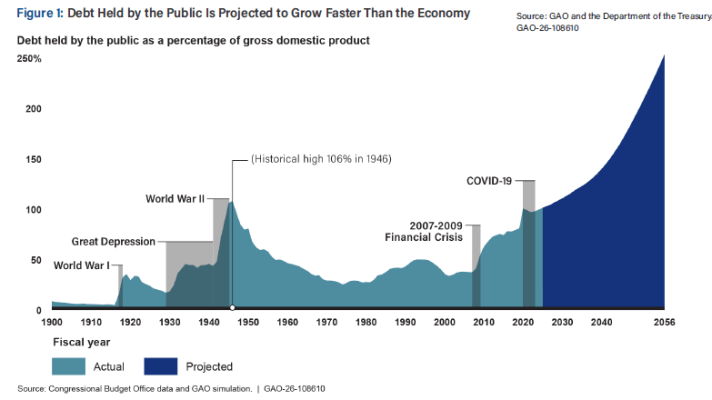
The Government Accountability Office (GAO) has issued a stark warning about the United States' fiscal health, stating that urgent and sustained action is needed to improve the fiscal outlook. The projection used in this assessment assumes no major catastrophes, such as the 2008-09 financial crisis or the COVID-19 pandemic, will occur in the next three decades.
The primary drivers of this trajectory are the aging baby boomer generation and the rapid growth of healthcare costs. These factors are expected to increase the share of GDP accounted for by Social Security and federal health care expenses, such as Medicare, Medicaid, and health insurance exchanges.
One of the key indicators of excessive debt is when interest payments on past debt become so high that they necessitate even more borrowing, leading to a vicious cycle of rising interest payments and mounting debt. The GAO questions what measures are required to keep the total US debt at approximately 100% of the GDP in the future. This modest goal would not necessitate balancing the annual federal budget but would instead entail reining in deficits enough to allow the debt to grow at the same rate as the economy.
The GAO estimates that to maintain debt held by the public at 100% of GDP in 2056, the federal government would need to either increase revenue by 26% each year, cut spending by 21% annually, or achieve a similar reduction through a mix of revenue enhancements and spending cuts. However, the lack of a clear plan from prominent federal policymakers on addressing this issue is deeply disheartening.
While proposals such as raising taxes on the wealthy or reducing fraud and abuse might seem appealing, they are not sufficient to meet the scale of the problem.
Written by urgent.news from Conversable Economist's reporting — not their text. Machine-written — may contain errors; check the original before relying on it.