From the flower field to the infinity room: a story of Yayoi Kusama’s journey to becoming a superstar artist
Discouraged from pursuing an artistic career as a young woman, Kusama went on to inspire millions with her performances, installations, paintings and more
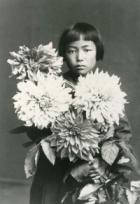
Yayoi Kusama, the renowned Japanese artist recognized for her polka dots, pumpkins, and infinity rooms, passed away at a Tokyo hospital on August 14 at the age of 97. Throughout her seven-decade career, Kusama explored various mediums such as painting, sculpture, installation, performance, film, fiction, and poetry. Her artistic journey began in the mid-1960s with the creation of mirrored environments in New York.
However, her influence faded after her return to Japan in 1973, as Anglo-American male artists dominated the scene. Renewed interest in her work emerged in the late 1980s following exhibitions at the Center for International Contemporary Arts in New York and the Museum of Modern Art in Oxford. A major retrospective at Tate Modern in 2012 further solidified her status as an international phenomenon, alongside commercial collaborations with major brands like Louis Vuitton.
Born in Matsumoto City, Nagano Prefecture on March 22, 1929, Kusama was the youngest child of a conservative and affluent family. She grew up in a house that owned a wholesale plant nursery, and spent her childhood sketching in flower fields. Kusama experienced her first hallucinatory episodes in violet beds, where she described the flowers as having "individual, human-like facial expressions" and engaging in conversations with her.
These visions also featured recurring images of nets and dots. It wasn't until the mid-1970s that she began acknowledging her psychological condition as a catalyst for her artistic practice, alongside the cathartic nature of art amidst traumatic family dynamics. Kusama's artistic career faced obstacles due to her social class and gender, which led to her parents' opposition to her pursuing a professional art career.
In 1948, she moved to Kyoto to study the modern Nihonga style of painting at the Kyoto Municipal Hiyoshigaoka Upper Secondary School. However, Kusama found the hierarchical teaching methods and nationalist ideology unappealing, leading her to experiment with Western art practices. By 1955, she moved to the United States, motivated by the need for more freedom to express her art.
Kusama's journey to New York began in 1957 when she arrived with US dollars sewn into her dress. She established her presence in New York's art scene by staging her first solo exhibition at Brata Gallery in October 1959, featuring five large-scale Infinity Net paintings. Her artistic style drew inspiration from both the dominant New York School and post-war industrialization critiques.
Kusama's breakout moment arrived when she debuted her Accumulation sculptures in 1962, which satirized mass consumption and industrialization through the use of sewn and stuffed phalli. Her Aggregation: One Thousand Boats Show in 1963 further showcased her innovative room-sized installations, laying the foundation for her iconic Infinity Mirror Room—Phalli's Field created in 1965.
Written by urgent.news from The Art Newspaper's reporting — not their text. Machine-written — may contain errors; check the original before relying on it.