From Images to Data
This eBook introduces the latest trends in quantitative spatial biology and how IMC is accelerating their adoption and success. The post From Images to Data appeared first on GEN - Genetic Engineering and Biotechnology News .
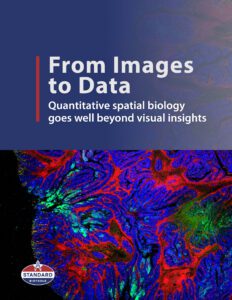
Quantitative spatial biology advances as researchers seek deeper insights into tissues beyond mere surface-level observations. High-plex spatial proteomics now offers the capability to measure single-cell molecular details within a tissue's context. This sophisticated quantitation propels imaging forward, enabling reproducibility, uncovering mechanistic insights, validating biomarkers, facilitating patient stratification, and providing regulatory-grade evidence.
Tissues are viewed as structured ecosystems where cell identity, function, and interactions rely on precise spatial organization and local microenvironments. By incorporating quantitative metrics, scientists can directly study alterations in cell behavior and tissue heterogeneity, and compare these patterns across samples, disease states, individuals, or treatment conditions.
The growing emphasis on quantitative harmonization is crucial, as only quantitative data can be normalized, benchmarked, and reused across scales. Imaging Mass Cytometry (IMC) stands out in spatial biology, with three key advantages over fluorescence-based methods: straightforward assay development, flexible acquisition modes allowing high throughput, and the ability to be extremely quantitative and sensitive.
IMC systems capture images pixel by pixel, with each pixel containing all protein markers collected simultaneously. The resulting data points form a puzzle, with the complete picture revealing a comprehensive view of disease dynamics. Investigating cancer progression, immune response to disease, or therapeutic response becomes possible by visualizing and quantifying the spatial organization of proteins across a tissue.
This approach allows the exploration of patterns in cell activity and the development of advanced modeling and predictive analytics, paving the way towards targeted therapeutics and personalized medicine. This eBook explores the latest trends in quantitative spatial biology and how IMC is driving their adoption and success.
Written by urgent.news from GEN Biotechnology's reporting — not their text. Machine-written — may contain errors; check the original before relying on it.