Forests Didn't Fare Well During an Ancient Global Warming Event, Offering a 'Cautionary' Tale About Today's Climate Change
An intense global warming event 56 million years ago caused a forest in modern-day Wyoming to lose around 60 percent of its canopy cover, and it took more than 100,000 years to bounce back, a study suggests
Around 56 million years ago, Earth underwent a period of intense global warming known as the Paleocene-Eocene Thermal Maximum (PETM). This event saw a massive surge in atmospheric carbon dioxide levels, causing forests to lose a significant portion of their canopy cover. According to a study published in the journal Science on August 13, it took more than 100,000 years for the forests to recover, offering a cautionary tale about the potential future of our planet due to ongoing human-induced climate change.
Dr. Regan Dunn, a paleobotanist at the Natural History Museum of Los Angeles County, explains that the Earth has never experienced a carbon release at the current pace. Today, humans are releasing carbon dioxide into the atmosphere at an unprecedented rate. Predicting the effects of this greenhouse gas on vegetation is complex, as elevated carbon dioxide levels can theoretically lead to enhanced plant growth.
However, excessive heat and its consequences, such as extreme weather events and increased pathogens, can also stress and kill plants.
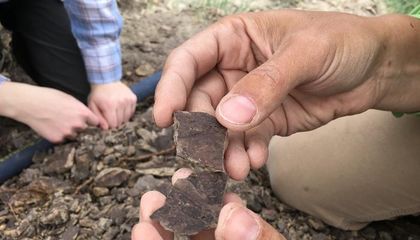
To understand what might happen to today's forests, Dunn and her colleagues examined fossilized leaf fragments found in the rocks of Hanna Basin in south-central Wyoming. These specimens preserve the shapes of the leaf's outermost cells, which can reveal the amount of sunlight the leaf received while growing. Leaves that grow in the shade have longer cells that stretch out to find light, while those exposed to the sun are shorter and rounder.
By analyzing these differences, the team was able to calculate the density of the forest canopy and track its changes throughout the PETM.
Initially, the forest thrived due to the elevated carbon dioxide levels. However, the growth spurt was short-lived. The canopy lost around 60% of its leaf coverage during the PETM and remained around 35% thinner than it started through the rest of the event. Dunn warns that the current rate of carbon release is unprecedented, emphasizing the urgency of addressing human-caused climate change.
Written by urgent.news from Smithsonian's reporting — not their text. Machine-written — may contain errors; check the original before relying on it.