Fed Chair Warsh signals rate hikes may be needed with inflation still elevated
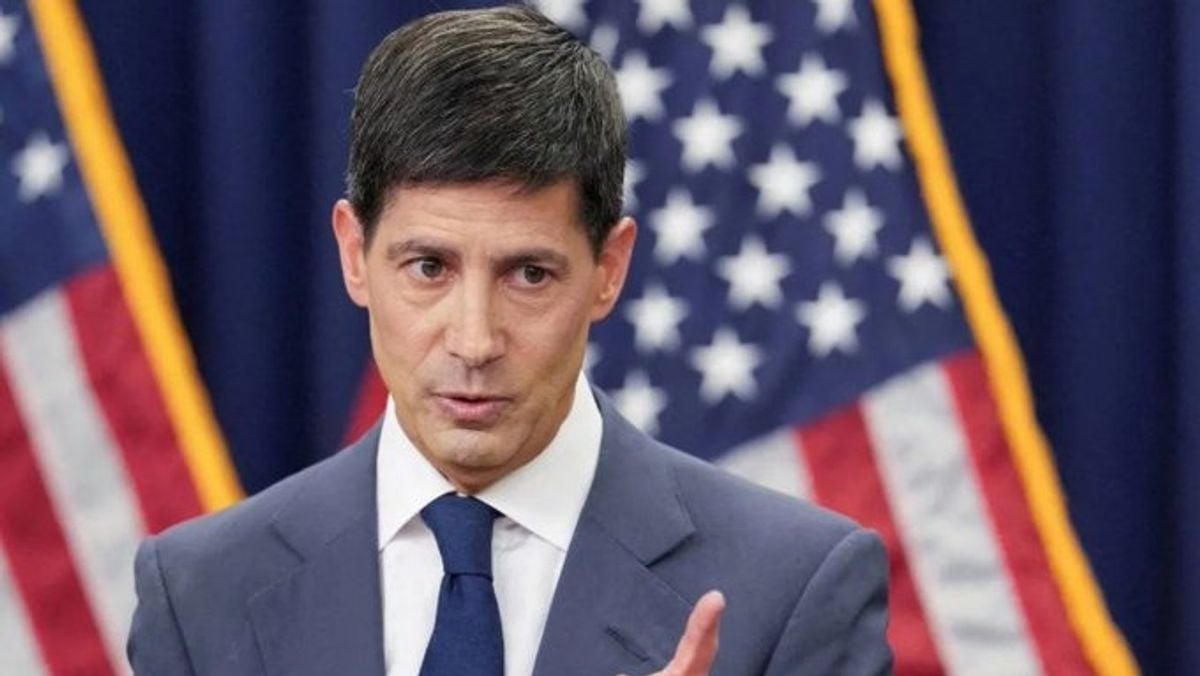
Federal Reserve Chair Kevin Warsh says inflation is still too high and suggested the central bank may have to raise interest rates in the coming months to bring it down, a clearer signal than he has sent before about his economic outlook
Federal Reserve Chair Kevin Warsh stated that inflation remains excessively high and the central bank may need to raise interest rates in the coming months to reduce it, a more explicit indication than he has given previously about his economic outlook. Delivering his first high-profile speech at the Fed’s annual conference in Jackson Hole, Wyoming, Warsh acknowledged that recent U.S. data show inflation has eased somewhat, but it does not indicate "meaningful improvement" in underlying trends.
He emphasized the need for confidence that inflation will move towards the central bank's objective at a sufficient pace. Warsh, who replaced Jerome Powell on May 22, faces significant challenges in his speech given the speculation around Wall Street about his focus on combating inflation. This may have contributed to increasing bond yields, which raise borrowing costs for the government and others.
Despite this, Warsh has stated he does not want to offer forward guidance about whether the Fed will raise or cut rates or remain neutral at upcoming meetings, arguing this limits the Fed’s flexibility by committing it to a specific policy. However, he acknowledged that interest rates are not currently restricting economic activity, pointing to strong business investment in AI equipment and infrastructure and robust consumer spending.
Warsh noted that inflation data are more concerning than job market trends, with unemployment at a low rate. He also argued that inflation is unlikely to return to the target on its own. In the past year, 54% of goods and services tracked by the government have experienced price increases of 3% or higher, down from the pandemic peak but still well above the 32% seen in the two decades before the pandemic.
While inflation cooled in June and July after surging in May due to rising gas prices, it remains above the central bank’s target of 2%. The Fed’s preferred measure shows inflation at 3.7% in July. Warsh also clarified that short-term interest rates are the primary tool the Fed can use to reduce inflation. Previous Fed chairs have used Jackson Hole speeches to address broad questions about interest-rate policy and the economy or signal future changes in their approach.
In 2022, when pandemic-era inflation reached 9.1%, Warsh’s predecessor Powell signaled the Fed would continue to sharply raise rates to combat soaring prices, acknowledging that such measures would cause "pain" for consumers and businesses. Most analysts expect the Fed to keep rates unchanged at its meeting in mid-September. Wall Street investors, however, are betting the central bank will hike rates by December, according to CME FedWatch futures pricing.
Questions about Warsh’s approach have intensified amid President Donald Trump’s calls for lower interest rates, despite his appointment of Warsh. Trump has criticized other Fed officials for supporting higher rates and has renewed efforts to remove Fed Governor Lisa Cook, appointed by former President Joe Biden, to enable him to appoint a majority on the seven-member board.
If Warsh can alleviate some of these concerns, longer-term interest rates may experience a slight decline.
Written by urgent.news from ABC News (US)'s reporting — not their text. Machine-written — may contain errors; check the original before relying on it.
This story
This is one outlet's version. Read the fullest account.
- High inflation could lead to rate hikes: Fed chief news.rthk.hk
- Fed’s Hammack calls for rate hikes, second Fed official today hellenicshippingnews.com
- Fed's Hammack: Time for Fed to act with rate hikes fxstreet.com
- Rate hikes may be coming amid inflation, new U.S. Fed chief signals globalnews.ca
- US Fed chair warns inflation progress insufficient, hints at rate hikes aljazeera.com
- Fed Chair Warsh signals rate hikes may be needed with inflation still elevated winnipegfreepress.com