Disasters like Nepal-Tibet floods could become more frequent with climate change: Experts
Glaciers across the region are melting at an accelerating rate.
Deadly landslides and floods in Nepal and Tibet, caused by melting glaciers, may become more frequent as the climate warms, according to experts. A catastrophic glacier collapse in the Himalayan region on August 26 resulted in over 500 fatalities and left thousands missing, including nine Singaporeans. Glacier loss rates have doubled since 2000, according to reports from the International Centre for Integrated Mountain Development.
Seismologist Lai Voon Hui from NTU's Asian School of the Environment warns that the region's glaciers are more susceptible to slope instability due to ongoing warming. Benjamin Horton, dean of City University of Hong Kong's School of Energy and Environment, explains that the Himalayan region is inherently prone to cascading hazards, with recent transboundary floods in July 2025 further illustrating this.
As glaciers retreat, they weaken steep valley walls, thaw permafrost, and introduce meltwater into cracks, increasing the likelihood of large rock-ice collapses and subsequent floods. These cascade events can travel far downstream, causing greater damage than the initial landslide. Monitoring and early warning systems must adapt to account for unstable rock-ice slopes and debris flow scenarios, as well as potential damming of rivers by debris.
Neera Shrestha Pradhan, a lead at the International Centre for Integrated Mountain Development, stresses the importance of cross-border early warning systems and community awareness of how to act on early warnings without panic. The exact cause of the Nepal-Tibet disaster remains unclear, but the event was initially classified as a magnitude 4.4 earthquake but later revised as a magnitude 5.2 seismic event caused by a glacial collapse and debris flow.
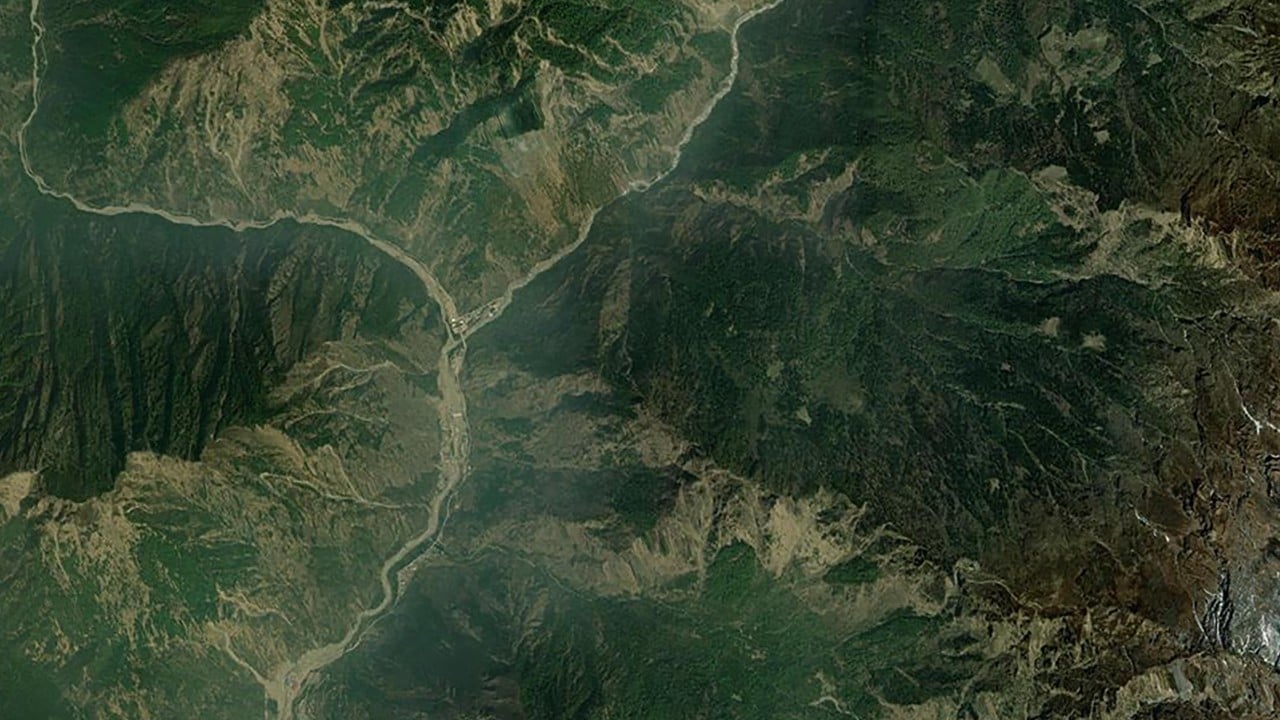
Preliminary satellite analysis suggests a significant portion of a glacier, about 5,200m above sea level, broke off and tumbled 1,200m. The combination of scale, mobility, and downstream consequences makes this event exceptional, even compared to previous rock-ice avalanches in the Himalayas. Mountainous regions like the Himalayas, with steep slopes, high topographic relief, intense rainfall, retreating glaciers, and degrading permafrost, are particularly vulnerable to such events.
Written by urgent.news from Straits Times's reporting — not their text. Machine-written — may contain errors; check the original before relying on it.
This story
This is one outlet's version. Read the fullest account.
- Nepal-Tibet floods: Latest developments in deadly disaster nst.com.my
- Nepal-Tibet flood deaths pass 500, thousands still missing dw.com
- Why so many Australians missing in Nepal-Tibet disaster are pilgrims abc.net.au
- PRAYERS FOR LOVED ONES: What we know about the six South Africans missing in Nepal-Tibet floods dailymaverick.co.za