Devastating scale of Himalayan floods comes into focus as rescuers arrive
Three days after a catastrophic wall of water, mud and rock tore through Nepal's Himalayan valleys, the scale of the disaster is still coming into focus. At least 579 people are now confirmed dead, nearly 2,000 remain missing, and the danger is not over. Authorities are closely watching lakes formed in the wake of the glacier collapse, amid fears of further flooding. Stephanie Sy reports.
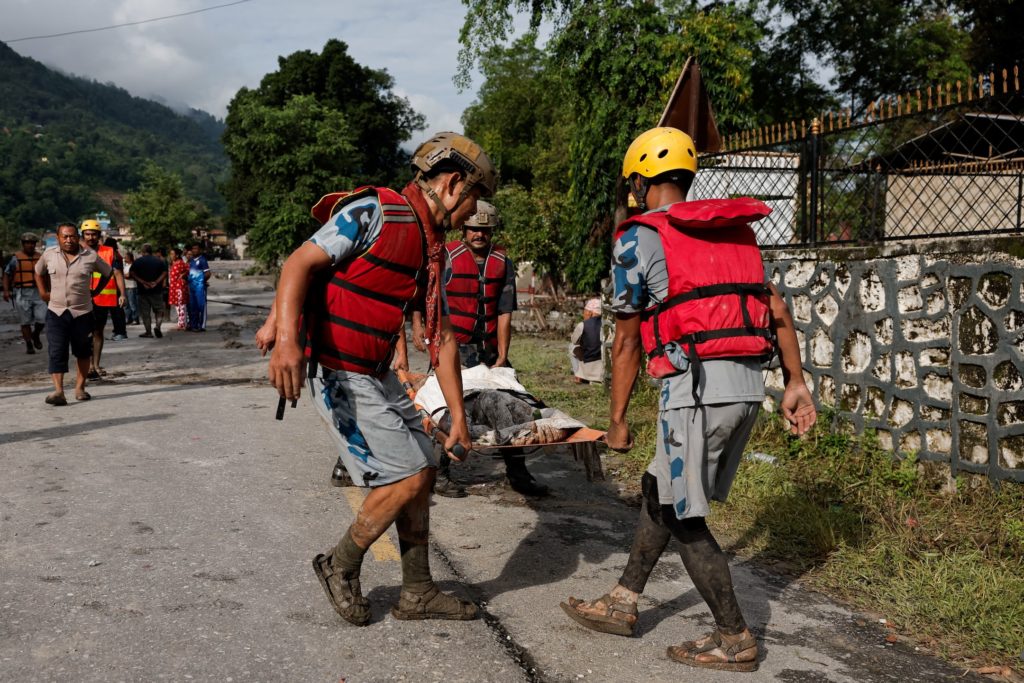
Three days after a massive flood swept through Nepal's Himalayan valleys, the true extent of the devastation is still becoming apparent. At least 579 lives are confirmed lost, while nearly 2,000 people remain unaccounted for. Authorities remain vigilant about potential further flooding, closely monitoring newly formed lakes. Stephanie Sy reports on the ongoing situation.
Nepalese officials say at least 579 people have been confirmed dead, with nearly 2,000 still missing. The death toll in China remains unclear. Stephanie Sy begins our coverage, detailing the grim aftermath of the flood. In Nepal, the Trishuli River is now a raging torrent of gray mud. Communities are filled with cries of grief and trauma, as residents flee to higher ground.
Police warn against approaching the river, as residents still struggle to evacuate. Authorities are monitoring various lakes formed by landslides, which pose a significant risk of additional flooding. Evacuated resident Indira Adhikari expresses the challenges faced by young people, who are still struggling to navigate through the mud.
Suraj Sigdel, Mercy Corps' Nepal country director, describes the unprecedented level of devastation, deeming it a climate-induced disaster. Search operations were halted due to new flood alerts, as authorities fear more rainfall and cloud bursts could exacerbate the situation. The dramatic images from the disaster are undeniable, with rivers transforming from calm to a torrent within seconds.
Nepal's army has managed to rescue 350 people from a tunnel beneath a hydroelectric dam, but over 100 remain trapped. China's Premier Li Qiang visited the affected region in Tibet, where emergency crews have utilized inflatable rafts to reach stranded individuals. Despite international rescue efforts, Nepalese officials assert their in-country rescuers are adequate for now.
However, emergency supplies from the United Nations, India, South Korea, and the United Kingdom are on the way, with the U.S. State Department pledging $500,000 in assistance. The Red Cross estimates a need for over $30 million to support the response. Scientists now believe the Himalayan glacier's bedrock collapsed, causing massive rockslides that plummeted over half a mile down, shattering debris into the valley's rivers and causing the deadly surge.
Experts suggest climate change may have contributed to such events. Sigdel firmly believes this was a climate-induced disaster, emphasizing Nepal's disproportionate impact in the face of its minimal contribution to climate change. Amid the mounting casualties, stories of survival offer glimmers of hope. Maddie Tamong, a mother, thought she had lost both children, trekking through the jungle and crossing rivers in search of them.
She finally found them, both injured but alive, as they were reunited. For the PBS News Hour, I m Stephanie Sy.
Written by urgent.news from PBS NewsHour Science's reporting — not their text. Machine-written — may contain errors; check the original before relying on it.
This story
This is one outlet's version. Read the fullest account.