Community programs linked to lower forest loss in Indonesia’s Borneo during COVID-19
Villages in Indonesia’s West Kalimantan saw less forest loss during the COVID-19 pandemic when conservation groups provided health and livelihood support, a new study has found, suggesting social safety nets can help protect forests during economic crises. The peer-reviewed study, published last month in Lancet Planetary Health, suggests forest loss in West Kalimantan province on […]
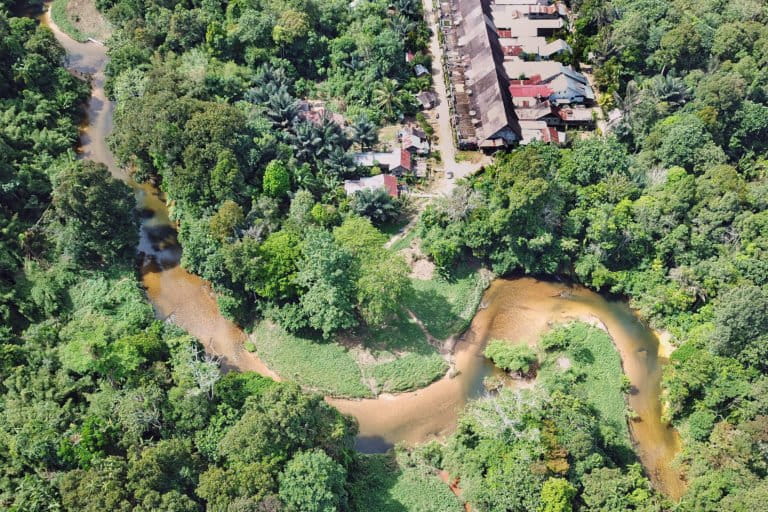
A recent study published in Lancet Planetary Health has discovered that villages in Indonesia’s West Kalimantan region experienced lower rates of forest loss during the COVID-19 pandemic when conservation groups provided health and livelihood support. The research, a collaborative effort combining household surveys with satellite data, indicates that the pandemic prompted a significant decline in forest loss due to weakened timber demand and travel restrictions, making logging operations less profitable and challenging to execute.
However, the researchers found that villages with access to alternative income sources and social assistance were less dependent on forests for their livelihoods, suggesting that social safety nets can play a crucial role in forest conservation during economic crises.
Skylar Hopkins, an assistant professor at North Carolina State University and the lead author of the study, expressed surprise that the pandemic did not initially trigger a surge in illegal logging. In fact, the average forest loss in NGO-affiliated villages was found to be 52% lower than in unaffiliated villages prior to the pandemic.
Indonesia, home to the world’s third-largest tropical forest area, has long faced threats from logging, agricultural expansion, and fires. The study surveyed ten villages in West Kalimantan in late 2021, with six communities receiving support from conservation groups.
Written by urgent.news from Mongabay's reporting — not their text. Machine-written — may contain errors; check the original before relying on it.