Comment | Felix Gonzalez-Torres's major survey in Madrid shows how his art was both stridently political and gently lyrical
The exhibition at the Museo Reina Sofía demonstrates the wealth of meanings in the artist's work
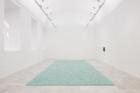
In 1971, 13-year-old Felix Gonzalez-Torres moved to Madrid from Cuba with his parents, as they sought refuge from the authoritarian rule of Francisco Franco. This move marked the beginning of his journey, which eventually led him to New York, where he became an artist. However, Gonzalez-Torres did not hold fond memories of his time in Spain.
One of his notable works, "Untitled" (Madrid 1971) (1988), reflects this sentiment, featuring a childhood mugshot alongside an image of a public statue with a rifle, symbolizing his youth in the context of Spain's political climate.
When invited to exhibit in Madrid in 1991, Gonzalez-Torres returned to the city, expressing his sentiment as "sweet revenge." The exhibition, currently on display at the Museo Reina Sofía until October 12, kicks off with "Untitled" (Revenge), a candy piece weighing 325 pounds, reflecting on his time in Madrid during Franco's regime. Gonzalez-Torres noted the works' adaptability in installation, as they can be arranged in various ways, inviting viewers to interact with them—taking a piece or leaving it behind.
The candy pieces symbolize loss and grief, particularly in relation to his longtime partner Ross Laycock, who was battling AIDS. The pieces were a form of "letting go" for Gonzalez-Torres, as he grappled with the fear of losing Laycock. Despite the tragic backdrop, these works remain generous to their audience, emphasizing the importance of public interaction in bringing them to life. Gonzalez-Torres believed that without a public, his creations would hold no meaning.
In a 1990 exhibition with Laycock in Los Angeles, they encountered Roni Horn's Gold Field, a thin layer of gold that represented a new landscape of beauty and rest. This encounter resonated with Gonzalez-Torres, as it encapsulated the essence of his work—distilling complex subjects into expressions of simplicity and poetry. His ability to achieve this, along with his willingness to engage with publics, has solidified his reputation among contemporary artists, even 30 years after his own passing from AIDS.
Written by urgent.news from The Art Newspaper's reporting — not their text. Machine-written — may contain errors; check the original before relying on it.