China leverages green power to fuel computing boom
YINCHUAN (Aug 29): As the sun beats down on the edge of the Tengger Desert on a summer day, rows of photovoltaic panels stretch across the dunes, turning intense desert light into electricity. Nearby, the steady hum of servers fills a data centre run by telecom giant China Mobile in the city of Zhongwei, northwest [...] The post China leverages green power to fuel computing boom appeared first on…
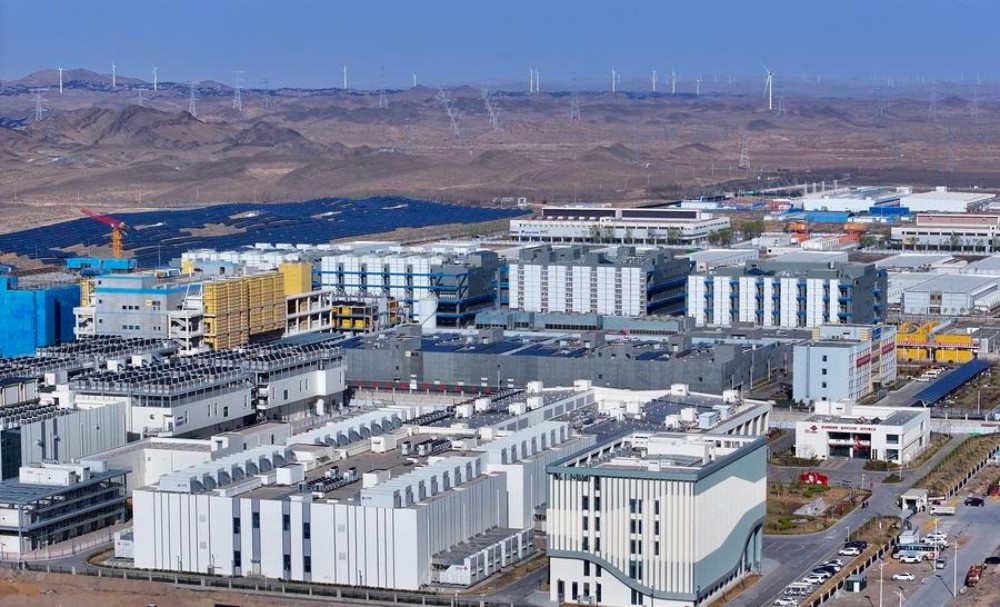
As the Tengger Desert basks in the summer sun, vast rows of solar panels stretch across the dunes in Zhongwei, Ningxia Hui Autonomous Region. Nearby, the hum of servers fills a data center operated by China Mobile, powered directly by the solar farm. Green power now supplies over 80% of the electricity for AI model training and other applications at the facility.
This solar farm, located in an area rich in renewable energy, is one of China's earliest projects to directly supply clean power to data centers. Complementing the solar farm, a 1.5-gigawatt wind farm under construction is expected to provide additional green energy at night. Once fully operational, the solar and wind projects will meet the annual electricity demand of approximately 2.29 billion kilowatt-hours for the Zhongwei data center cluster.
This demand comes from a rapidly expanding computing cluster that currently houses 10 large data center parks, with major internet companies like Alibaba, Baidu, Tencent, Meituan, and ByteDance operating there. As data centers require stable, reliable, and affordable electricity, the need for green power has become increasingly pressing.
Globally, data centers are projected to consume 945 terawatt-hours of electricity annually by 2030, and in China, consumption has doubled from 82.4 terawatt-hours in 2019 to 166 terawatt-hours in 2024. In response, China has set a goal for newly built data centers in major computing hubs to use at least 80% green power. The city of Zhongwei, located in renewable-energy-rich Ningxia, offers a dry, cool climate, stable geological conditions, and natural cooling for eight to 10 months a year.
These factors, combined with its central location for connectivity, make Zhongwei an attractive hub for computing. The city's growth as a computing hub aligns with China's strategy of shifting computing workloads westward, where renewable energy and land are more abundant. In 2025, Zhongwei ranked fifth among 302 Chinese cities in a city-level computing power index, with computing capacity reaching 283,100 petaflops.
The coordinated development of computing capacity and electricity supply has been highlighted in the government work report as a key area of new infrastructure development. China's 2026-2030 development blueprint calls for further advancing the "East Data, West Computing" project and expanding its integrated computing network.
Written by urgent.news from Borneo Post Online's reporting — not their text. Machine-written — may contain errors; check the original before relying on it.