Bawumia defends Gold-for-Reserves programme as response to Ghana’s forex crisis
New Patriotic Party (NPP) flagbearer Dr Mahamudu Bawumia has defended the Gold-for-Reserves programme, describing it as an unconventional solution introduced to address Ghana’s foreign exchange challenges at a time when the country could no longer rely on international capital markets. According to him, the policy became necessary following disruptions to global financial markets triggered by […]
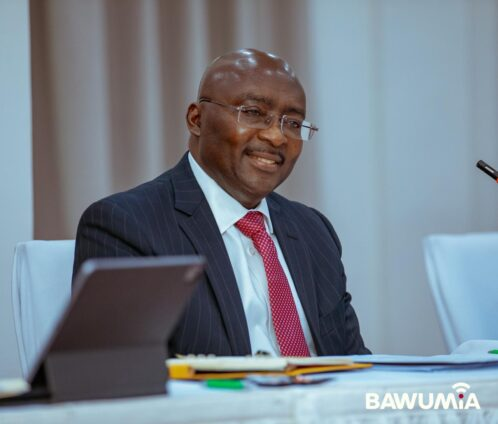
Ghana's Vice President Dr. Mahamudu Bawumia has defended the nation's Gold-for-Reserves programme, asserting it serves as an innovative solution to the country's foreign exchange crisis. This strategy was implemented as a last resort when Ghana could no longer depend on foreign capital markets, primarily due to the Russia-Ukraine conflict, which limited the country's capacity to raise foreign currency.
Historically, Ghana had relied on international capital markets to raise around $3 billion annually. The suspension of access to these markets resulted in substantial foreign exchange shortages and a weakening cedi. Recognizing the pressing need for a resolution, Dr. Bawumia argued that Ghana, being Africa's leading gold producer, could leverage its domestic gold production to bolster its foreign exchange reserves.
Despite Ghana's status as the continent's top gold producer, the Bank of Ghana held only 8.7 tonnes of gold in reserves in 2021. Dr. Bawumia lamented this situation, emphasizing that Ghana could purchase gold using its cedis, eliminating the need to export commodities like cocoa or diamonds to acquire dollars. He described the Gold-for-Reserves policy as an example of unconventional economic thinking, necessitated by the unique challenges faced by the country.
The Bank of Ghana spent nearly a year evaluating the proposal before approving it. The programme led to the purchase of approximately $5 billion worth of gold over two years, significantly strengthening Ghana's reserve position. By the end of 2024, the International Monetary Fund (IMF) lifted a restriction that had limited the Bank of Ghana's monthly foreign exchange intervention to $80 million.
With this increase, the Bank of Ghana has been able to inject at least $1 billion a month into the market, easing pressure on the cedi and applying the economic principle that increased supply typically leads to a decrease in price.
Written by urgent.news from Adom Online's reporting — not their text. Machine-written — may contain errors; check the original before relying on it.
This story
This is one outlet's version. Read the fullest account.
- How IMF capped forex intervention to $80m a month, lifted restriction in 2025 after reserves accumulated – Bawumia reveals adomonline.com
- Bawumia defends Gold-for-Reserves programme as answer to Ghana’s forex crisis myjoyonline.com
- Gold-for-Reserves programme lifted IMF restrictions that capped BoG’s interventions in forex at $80 million a month – Bawumia starrfm.com.gh