Bank of Canada to hold rates for another year, wait for more stability on trade: Reuters poll
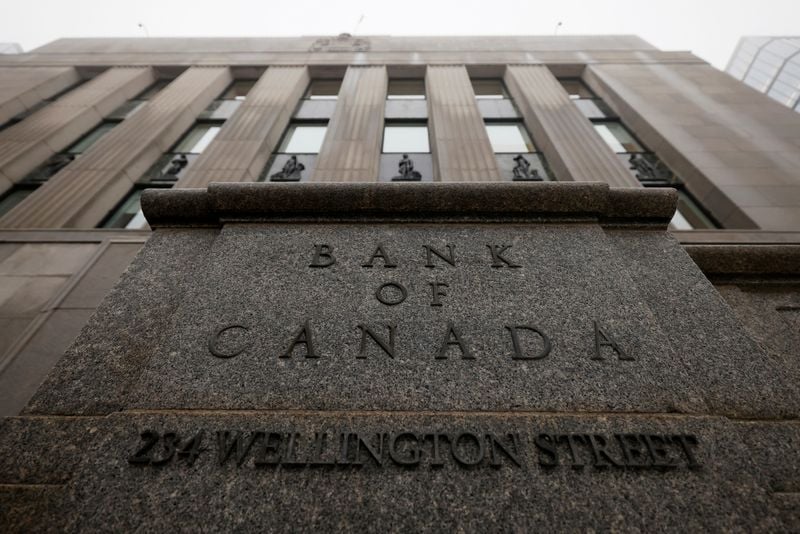
The Bank of Canada will maintain its overnight rate at 2.25% for at least another year, according to a Reuters poll of economists who have yet to alter their forecasts following the cessation of trade negotiations with the United States. The central bank has kept rates unchanged since October, monitoring for indications of increasing inflation and reduced economic activity since the initiation of the U.S.-Israeli conflict with Iran in late February, alongside escalating trade tensions with its leading export market.
Inflation was already at the upper limit of the BoC's 1-3% target range in July. Nonetheless, stable core inflation signifies demand remains weak, and combined with an anticipated recent economic rebound, provides the central bank with ample opportunity to delay rate hikes. The survey, conducted after Canadian Prime Minister Mark Carney abandoned the latest round of tariff talks on August 22 and announced retaliatory tariffs and support measures for impacted businesses, indicated rates remaining at 2.25% for the remainder of the year and until the third quarter of next year.
All 35 economists anticipated the overnight rate to stay on hold at the conclusion of the Bank's policy meeting on September 2, aligning with market predictions.
The BoC is projected to increase the rate to 2.50% in the final quarter of next year, unchanged from expectations in a July poll. Avery Shenfeld, managing director and chief economist at CIBC Capital Markets, noted, "In the short term, any worries regarding inflation ahead are roughly balanced by risks to economic growth emanating from trade tensions, leaving the Bank in a watchful-waiting stance."
Approximately half of economists polled, 47%, projected the BoC will raise rates at least once by the end of Q2 2027. Canada's exports to the U.S. continue to be safeguarded by the U.S.-Mexico-Canada free trade agreement, which concluded on July 1 and which the U.S. has decided to review yearly instead of extending for another decade.
Some economists expressed concerns about additional inflationary pressure resulting from recent currency weakness. Jennifer Lee, senior economist and managing director at BMO Capital Markets, commented, "The Canadian dollar has already weakened due to this failure of the trade talks. Therefore, this is likely to exert further inflationary pressure."
Nevertheless, for the moment, an intensification in the trade war is projected to predominantly impede Canada's gross domestic product growth rather than introduce heightened inflationary pressure. This effect will be mitigated to some extent by the federal government's support measures, according to some economists. Robert Both, macro strategist at TD Securities, added, "The way I perceive the recent tariffs is that they serve to offset some of the stronger data we've observed over the past few months, and the economic impact remains narrow enough to permit the BoC to raise rates next year."
Canada's economy expanded at an annualized rate of 3.3% last quarter, largely in line with forecasts, rebounding sharply from a technical recession with assistance from a substantial surge in exports and robust domestic demand.
Written by urgent.news from Investing.com's reporting — not their text. Machine-written — may contain errors; check the original before relying on it.