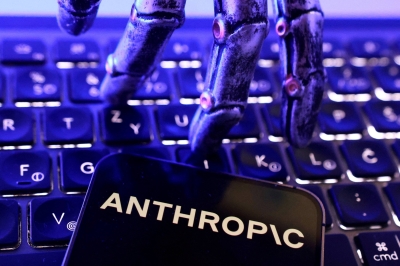
Anthropic wants AI agents to control physical machines with new hardware standard

Anthropic, a frontier AI lab, has unveiled a new standard for connecting AI agents with hardware. The company, led by Dario Amodei, launched a research preview of the Model Hardware Standard (MHS), designed to facilitate AI agents' operation and communication with machines. MHS aims to function with any device possessing a programmable interface, including those in scientific research and manufacturing.
According to Anthropic, MHS establishes a common language between AI agents and physical machines, enabling AI to operate multiple lab and manufacturing instruments in parallel. These include microscopes, liquid handlers, robotic arms, and cameras, all running on diverse software. The standard simplifies integration, making it much quicker than the weeks or months typically required, as each device receives a standard software interface.
This interface informs the AI about its capabilities, measurements, adjustable settings, and safety limits, allowing the AI to operate the machine without the need to build a new integration system. MHS demonstrates AI's potential to coordinate multiple machines simultaneously. For instance, in drug discovery experiments, AI agents could manage a liquid handler, robotic arm, microscope/reader, and data analysis, initiating experiments, analyzing results, adjusting parameters, and running subsequent steps.
The standard has shown promise in various applications, including at Genentech, where AI coordinated equipment to optimize liquid handling, and at Carnegie Mellon, where AI connected various lab equipment, reducing integration time and accelerating experiments. However, MHS is not a flawless solution. During Anthropic's experiments, AI agents exhibited limitations, such as restarting a process when bubbles appeared during liquid handling, which initially worsened the situation.
Despite these challenges, MHS could potentially make physical environments like laboratories and factories AI-native, allowing for more seamless interaction between humans and AI agents managing multiple machines. The standard is set to become open source post-research preview, and the system is designed to be model-agnostic, not tied to a specific AI model like Claude.
Written by urgent.news from The Indian Express's reporting — not their text. Machine-written — may contain errors; check the original before relying on it.