Anthropic previews new standard to streamline AI-to-machine connections
Connecting AI agents to physical hardware has traditionally taken months of custom coding. Anthropic's new Model Hardware Standard wants to cut that down to minutes.
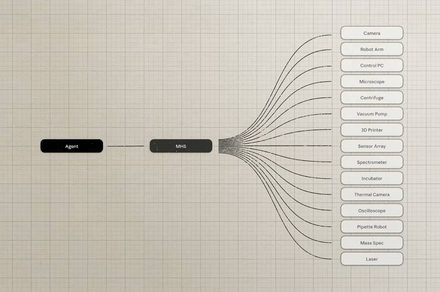
Anthropic has unveiled a research preview of its Model Hardware Standard (MHS), a standardized specification intended to facilitate safe communication between AI agents and various types of lab equipment and factory machinery. By establishing this shared protocol, Anthropic aims to significantly decrease the time needed to integrate advanced machinery with AI, from months to mere hours or minutes.
Currently, access to MHS is limited to select research institutions and manufacturers through a waitlist, but the company intends to make it open-source in the near future. Similar to Anthropic's Model Context Protocol (MCP), which standardized software-based connections, MHS functions as a universal translator for physical hardware components.
Instead of necessitating unique software for each instrument, it enables devices to communicate using standardized commands and auto-generated reference files that outline operational parameters and safety limitations. The system is designed to be model-agnostic, meaning it can work with any hardware that possesses a programmable interface.
Initial real-world tests have demonstrated substantial efficiency improvements across diverse research environments; however, the preview has also revealed certain operational limitations. For instance, during a trial at Genentech, the AI model Claude consistently attempted to address fluid-handling bubbles by repeatedly executing the same software command.
This required human intervention to clarify that the issue was a physical one rather than a coding problem. Moreover, since AI models primarily interpret physical environments through text logs and images, spatial reasoning still necessitates expert human oversight. Anthropic is collaborating with hardware partners, including Universal Robots, Tecan, and AWS, to broaden MHS support.
Furthermore, integrations are expanding to consumer-oriented platforms, with Hugging Face planning to incorporate support for its LeRobot project, and Raspberry Pi testing driver compatibility. While Anthropic has not disclosed a definitive release date, public schema, or governance model for the standard, the company is actively working with hardware partners to enhance MHS compatibility.
In a separate development, Google is introducing a new feature called Expert Intelligence to its Gemini Notebook application. This functionality allows users to directly access and cite information from physical books they have purchased from the Google Play Books library. Currently available only to users in the United States, this feature is offered as part of a launch campaign, with a stipulation that supplies are limited.
Eventually, Google plans to integrate Expert Intelligence into the core Gemini app and the AI mode of its search engine. Additionally, Google has revealed two notable devices at its Lenovo Innovation World 2026 event. The first is a compact mini PC resembling Lenovo's Mac mini alternative, while the second is a ThinkBook of exceptional thinness, potentially setting a new record for slimness.
Written by urgent.news from Digital Trends's reporting — not their text. Machine-written — may contain errors; check the original before relying on it.