A true puncture entails an element of misfortune, and a legitimate feeling of being hard-done by
Despite what some might thing, not all punctures are equal; here's why
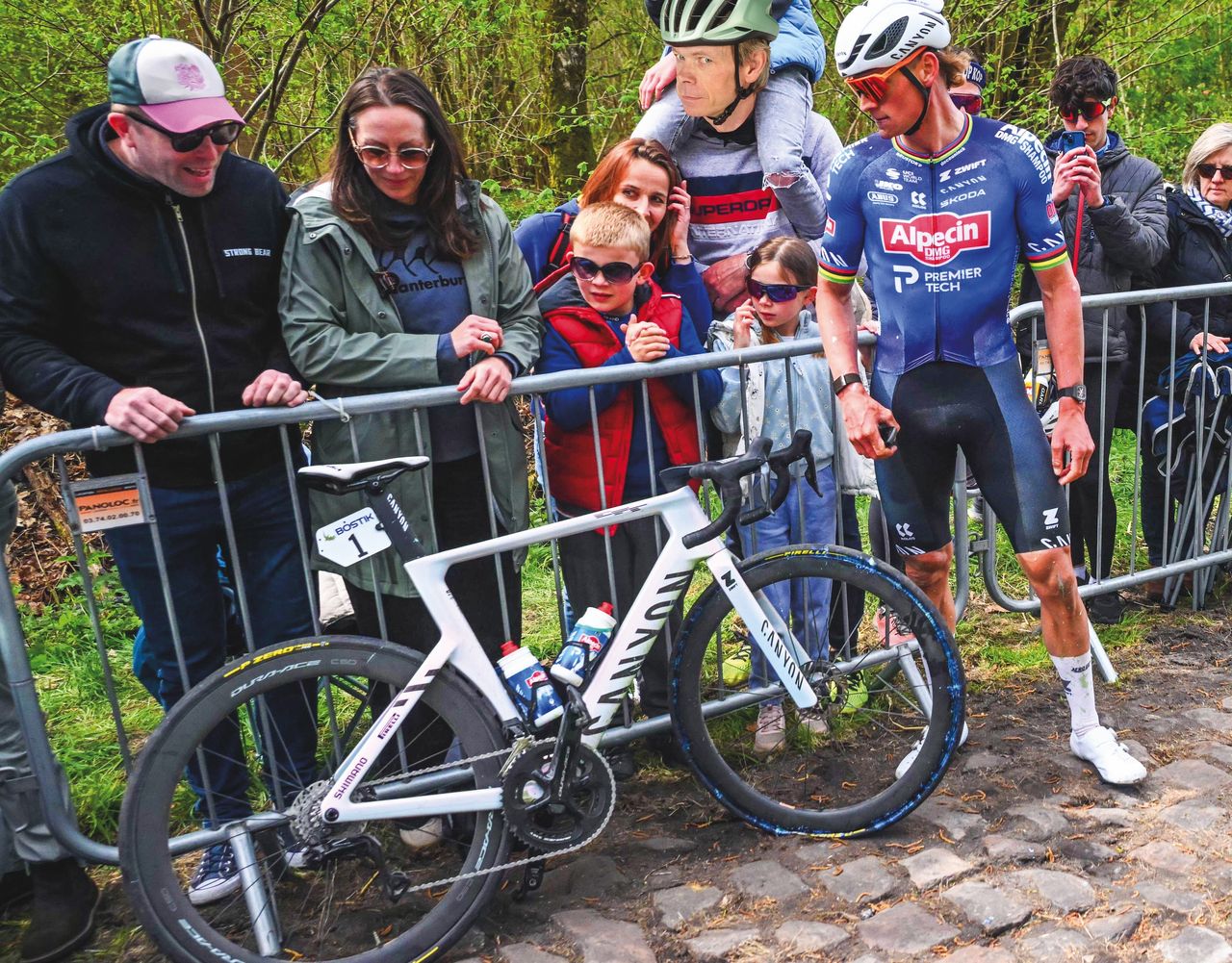
On the Tuesday following the Paris-Roubaix weekend, the author found themselves out for a bike ride with a companion, only to encounter a puncture. Unperturbed, they took a moment of respite by sitting on a nearby bench and changing the inner tube. This experience was markedly different from the punctures that had marked the Roubaix events as they journeyed through Northern France in a sea of frustration.
The author contemplated the myriad types of punctures that could occur. They identified a spectrum of possibilities, ranging from rapid and alarming to merely irritating, encompassing both the mundane and the enigmatic. At one end of the spectrum, there were punctures that were both swift and alarming, such as the front-tire blowout experienced by two friends while descending a Welsh hill at a rapid 100 kph during a tandem race.
In such instances, there was a sudden impact followed by a period of silence that they would never forget. Conversely, there were punctures that were rapid but unremarkable. Shortly before the commencement of a time trial, the rider behind the author pointed out an unusual phenomenon in their back tyre. A small hole had formed in the tyre's carcass, and the latex inner tube was slowly extruding through it, culminating in a quiet "pop" and deflation of the tyre, thereby ending the race.
This fast puncture, although novel, was devoid of excitement. The author also mentioned the ineffectiveness of tubeless sealant in protecting against rapid punctures, but it did have the undesirable consequence of creating an overly messy situation. The author initially believed that rapid and terrifying punctures were the most unfortunate, until they experienced an advanced sealant enema.
While old-fashioned punctures were met with relief at surviving, tubeless punctures presented a slightly regrettable outcome. Mid-speed punctures were less thrilling, being merely annoying regardless of the context – whether it was a race, a club run, or a solitary ride. On a solo ride, however, they could occasionally be endearing, providing an opportunity to appreciate the surroundings, listen to the sounds of nature, and ponder the whereabouts of the spare tube, only to be disappointed again.
Slow punctures, on the other hand, were exasperating. They raised questions about the feasibility of reaching home and prompted the author to repeatedly assess the trade-off between energy expenditure and tyre pressure. The author pondered whether they would be able to recalculate the situation enough times to abandon the ride or if they would ultimately opt for a fix.
Alternatively, slow punctures could remain undetected until returning home, and in some cases, they could even provide a sense of satisfaction, as the bike appeared as worn and aged as its owner after sitting on a flat tyre for several hours. The author also noted the existence of other types of punctures, including phantom punctures, where the sensation of a softening tyre is experienced but disappears upon inspection, and intermittent punctures, where the tyre remains inflated after re-inflation, only to mysteriously deflate at a later time.
However, the Roubaix puncture, caused by riding over large, sharp, uneven rocks at 50 kph on lightweight racing tyres, was unique. It was an unfortunate event that evoked a legitimate sense of frustration, akin to kicking a wall and complaining about the resulting pain.
Written by urgent.news from Cycling Weekly's reporting — not their text. Machine-written — may contain errors; check the original before relying on it.