35 years of the Weimar Triangle: France, Germany and Poland shaping Europe’s fut...
The Weimar Triangle was founded on a conviction that remains as relevant today as it was 35 years ago — together, we are stronger.
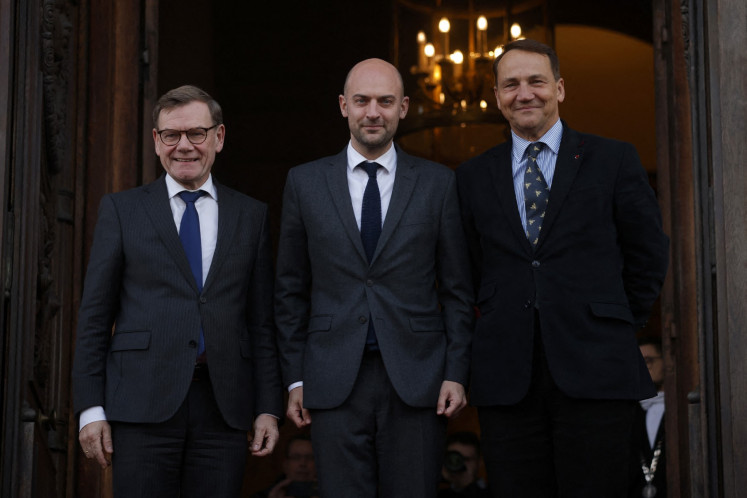
On August 28, 1991, the Foreign Ministers of France, Germany and Poland convened in the German city of Weimar, giving birth to what is now known as the Weimar Triangle. The concept was straightforward yet ambitious - to cultivate a unique relationship between three nations whose histories had frequently been characterized by rivalries and conflicts, at a time when Poland was reclaiming its freedom and sovereignty.
The Weimar Triangle was inspired by the Franco-German reconciliation that occurred after World War II, a transformation that had once seemed unprecedented - converting centuries of animosity into partnership. This idea, simple yet ambitious, has remained as pertinent today as it was 35 years ago - the unyielding truth that "together, we are stronger."
Since its inception, the Triangle has evolved and adapted to the changing European realities. Initially, it provided support for Poland's democratic transition and anchored a newly democratic Poland in Europe. Following Poland's accession to NATO in 1999 and the European Union in 2004, the Triangle began to focus more on the future of the EU, enlargement, neighborhood policy, and European affairs.
Despite the lack of formal institutions, the Triangle's strength lies in its adaptability. Today, this adaptability is being put to the test once again. Russia's full-scale war against Ukraine has fundamentally altered Europe's security environment and brought the strategic perspectives of Warsaw, Paris, and Berlin closer together. This evolving scenario underscores the enduring relevance and adaptability of the Weimar Triangle.
Written by urgent.news from The Jakarta Post Academia's reporting — not their text. Machine-written — may contain errors; check the original before relying on it.