Yellowstone visitors once used Handkerchief Pool like a natural washing machine
Yellowstone’s Handkerchief Pool was once a popular attraction where visitors put handkerchiefs into its water and watched them disappear and return. Its activity stopped after a log blocked the pool in 1926. A 1929 cleanup removed 1.5 bushels of debris, including over 100 hairpins, coins and a horseshoe.
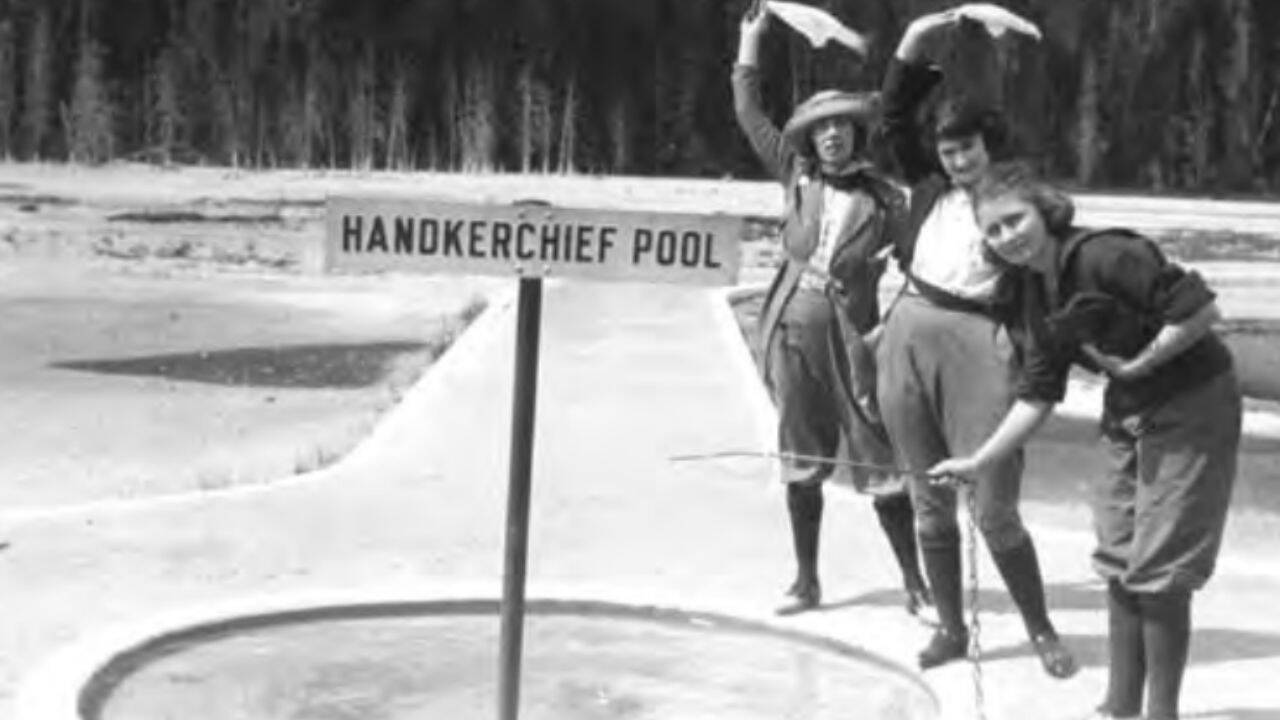
In the early days of Yellowstone National Park, visitors were drawn to its unique thermal features, including Handkerchief Pool in the Black Sand Basin. Park officials encouraged guests to try putting a handkerchief into the pool, believing it would emerge clean after traveling through the water currents. However, this idea quickly turned into a problem as people began throwing various objects into the pool, turning it into a dumping ground for litter and debris.
By 1926, the pool's activity ceased when a log was shoved into its vent, blocking the water movement that created its distinct feature.
Even after the pool stopped functioning, visitors continued to deposit objects into it. Over time, the accumulation of materials clogged the vent and interfered with the pool's natural activity. Park records reveal that Rangers Carlos Davis removed over one and a half bushels of debris from Handkerchief Pool in 1929, including coins, hairpins, nails, bolts, a horseshoe, a broken bottle, spark plug fragments, badges, nuts, and numerous handkerchiefs.
The 1929 cleanup helped restore the pool's convection currents, but the damage was extensive, and further maintenance was needed. Similar damage occurred at other geothermal features, such as Minute Geyser and Morning Glory Pool, both of which suffered from debris and alterations caused by visitors. Minute Geyser's eruptions became irregular and weaker after rocks and other debris were thrown into its vent, while Morning Glory Pool's temperature dropped and algae began to grow due to clogged vents.
Despite efforts to restore the pool, Handkerchief Pool's unique feature was permanently altered by its prolonged inactivity, with algae mats spreading onto its rims. This incident highlights the vulnerability of geothermal systems to human activity, even seemingly harmless actions. Yellowstone's protection as the world's first national park was largely due to its valuable geysers, making the preservation of these fragile natural wonders crucial for the park's history and legacy.
Written by urgent.news from Times of India's reporting — not their text. Machine-written — may contain errors; check the original before relying on it.