Yayoi Kusama, Japanese artist who enthralled people worldwide with her polka dots and mirror rooms, has died aged 97
The artist, who died on 14 August at a hospital in Tokyo, drew record crowds with her innovative installations, paintings and soft sculptures
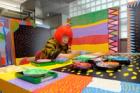
Yayoi Kusama, the renowned Japanese artist known for her polka dots, pumpkins and Infinity Mirror Rooms, has passed away at the age of 97. She passed away on August 14 at a hospital in Tokyo due to multiple organ failure, according to a statement from the Yayoi Kusama Foundation on August 27. Despite continuing to paint until shortly before her death, Kusama remained committed to her lifelong belief that love could save the world.
Her funeral was held privately for close family members, with a public memorial event planned for a later date.
Born in Matsumoto, Nagano Prefecture in 1929, Kusama developed an interest in art at a young age, experiencing visions and hallucinations that would later inform her unique style of repeated nets, dots and organic forms. She moved to the United States in 1957 and began her career in New York, creating Infinity Net paintings, soft sculptures and mirror-based installations that established her within the city's avant-garde scene.
By the late 1960s, Kusama had expanded her work to include provocative happenings involving nude participants painted with polka dots, combining sexual liberation with anti-war messages.
In 1966, Kusama made an unauthorized appearance at the Venice Biennale with her Narcissus Garden installation, displaying 1,500 reflective silver spheres outside the Italian pavilion for visitors to view and purchase. The Biennale organizers eventually halted the sale. Kusama returned permanently to Japan in 1973, where she continued creating visual art, as well as writing fiction and poetry. She voluntarily resided at a mental health hospital in Tokyo until her passing, maintaining her dedication to her craft.
Kusama's international stature grew in subsequent decades, and in 1993, 27 years after her unauthorized Venice intervention, she officially represented Japan at the Biennale. Her late career was marked by remarkable productivity, culminating in the My Eternal Soul series from 2009 to 2021 and the intimate, poem-infused Every Day I Pray for Love series.
Her immersive installations garnered immense popularity, with a 2024-25 retrospective at Melbourne's National Gallery of Victoria attracting 570,537 visitors, making it the most attended ticketed exhibition in the museum's history.
David Zwirner, who represented Kusama in the United States since 2013, hailed her as "without a doubt, the most famous living artist in the world" at the time of her death. Her longtime representative in Japan, Hidenori Ota, described her as a strong, serious and straightforward individual whose ability to transform her marginalization into strength was a significant aspect of her legacy.
A major retrospective of her work spanning seven decades opened at Switzerland's Fondation Beyeler last year and traveled to Germany's Museum Ludwig, concluding with a posthumous tribute at Amsterdam's Stedelijk Museum.
Written by urgent.news from The Art Newspaper's reporting — not their text. Machine-written — may contain errors; check the original before relying on it.