Women Are ‘Free’, Until They Actually Exercise Freedom
A man can abuse, threaten, insult, and humiliate someone in public and still be called aggressive or politically formidable. A woman using the same language can trigger a debate about culture. Suddenly, the woman herself becomes the subject. That contradiction seems to be the heart of Rahul Gandhi’s remarks in Pune after Prime Minister Narendra Modi’s comments about the “cultural shock” of young…
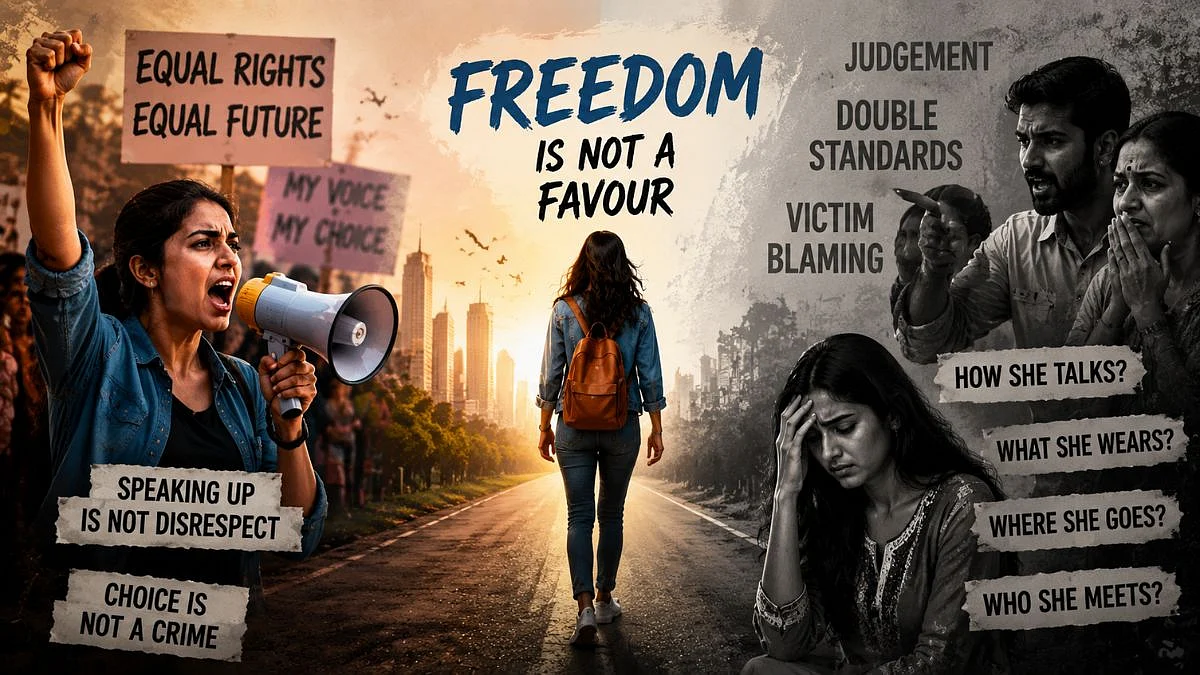
The paradox of Indian women's freedom is exemplified by Rahul Gandhi's criticism of Prime Minister Modi's remarks regarding young women's protest language at Jantar Mantar. The contradiction lies in the perception that men's aggressive behavior is tolerated, but the same actions from women trigger debates on culture and societal norms.
Indian society has historically granted women certain rights and institutions, yet freedom for women remains conditional. In public, women face judgment for virtually any action, whether it's speaking bluntly, dressing differently, pursuing a career, choosing partners, or asserting sexual autonomy. Men can express themselves freely and are often admired for their toughness, but women are scrutinized for every word they utter.
This double standard extends to political discourse, where politicians frequently resort to abuse, innuendo, and personal attacks against women, making it difficult to engage with their arguments. Women are expected to fulfill multiple traditional roles, such as being obedient daughters, accommodating wives, dutiful daughters-in-law, and competent professionals.
The pressure on women's appearance and behavior is enormous, with clothing often being the first point of judgment. Popular films perpetuate the idea that sexually assertive or defiant women are transgressions, leading to harsh consequences for such behavior. Sexuality carries the harshest penalties; a man's sexual history is often seen as a badge of experience, while a woman's is viewed as a verdict on her character.
The burden of managing household responsibilities, caring for aging parents, and juggling career demands falls primarily on women's shoulders. Despite these challenges, many Indian women continue to face violence, harassment, and abuse in various forms, including rape, domestic violence, and sexual harassment. The digital age has added new threats, such as doxxing and public shaming, further exacerbating the issue.
While politicians make grand claims about women's empowerment, the reality is that significant cultural and structural changes are needed to truly empower women. This includes changing societal expectations, redefining gender roles, and ensuring equal opportunities in leadership positions. The empowerment of Indian women must extend beyond political rhetoric and into everyday life, where they can express themselves freely without facing judgment or discrimination.
Written by urgent.news from Free Press Journal's reporting — not their text. Machine-written — may contain errors; check the original before relying on it.