Why was the first picture of the Red Planet's surface black and white – and what camera was used to take it 50 years ago?
In July 1976, NASA shared the first-ever image of the surface of Mars with the world – but what camera did they use, and why was the shot black and white when it was supposedly revealing secrets of the “Red Planet”?
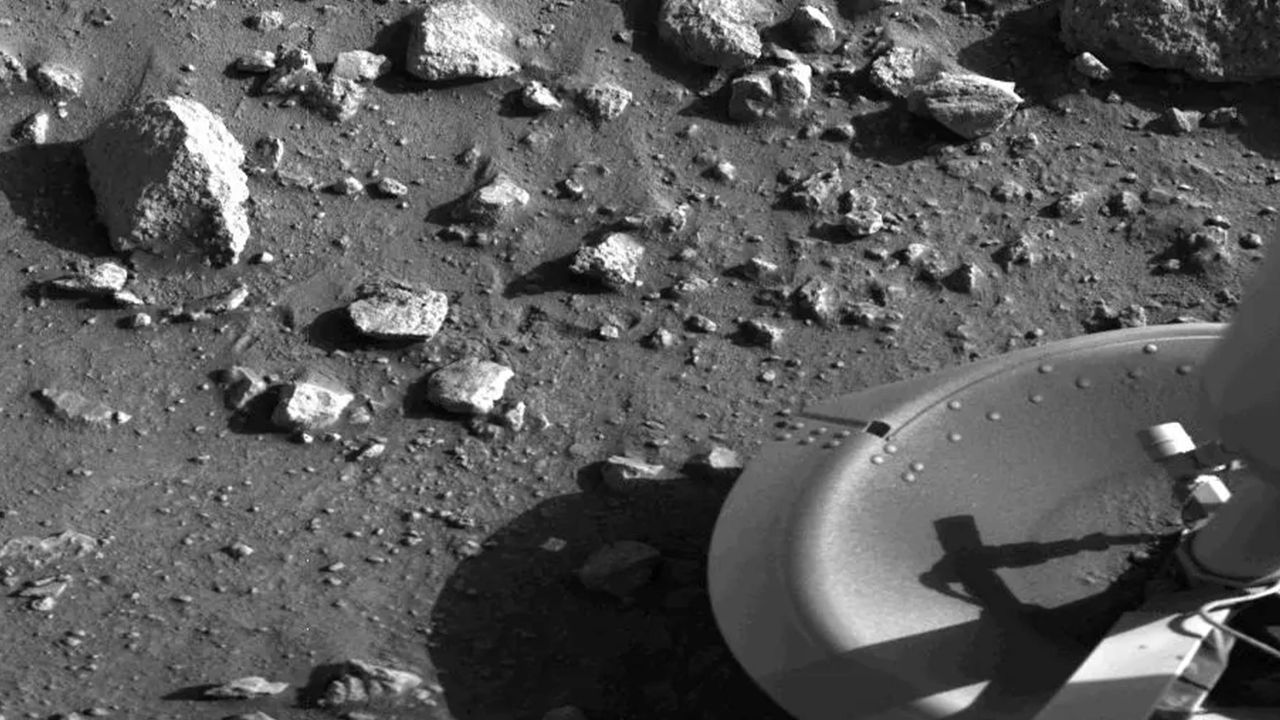
On July 20, 1976, NASA made history by successfully landing the Viking 1 lander on Mars, marking a monumental achievement for humanity and photography. Just 25 seconds after touchdown, the spacecraft captured the world's first image of the Martian surface, located in the Chryse Planitia region of the northern hemisphere. Dr. Thomas Mutch, the imaging team leader, described the moment with awe: "A sliver of electronic magic appeared on the black screen."
However, the first image was not as breathtaking as expected. Instead of a vibrant, red, dusty landscape, the monochrome picture revealed just a few meters of rocky ground, with the Viking 1 lander's landing pads visible in the bottom-right corner. Despite its lackluster appearance, the image was a vital health check confirming the lander's successful journey and readiness to begin data collection.
The use of a pair of 16.1lb (7.3kg) facsimile cameras, each weighing about a meter apart on the lander's upper deck, enabled this historic capture. These cameras operated like a slow fax machine, scanning the Martian landscape line by line and delivering a stereoscopic (3D) view. For grayscale images, light passed directly to the detectors without filters, allowing for faster recording and transmission of the data back to Earth.
This was crucial for immediate post-landing checks, which is why NASA programmed the lander to capture the first image in black-and-white. Capturing color photos required significantly more time, as the cameras needed to scan the same scene three separate times using red, green, and blue optical filters.
Written by urgent.news from Digital Camera World's reporting — not their text. Machine-written — may contain errors; check the original before relying on it.