Why Astronauts' Lower Eyelids "Let Go" in Space
A new study identifies possible mechanisms behind changes in astronauts' lower eyelids, a symptom associated with long periods in space that can affect their eyesight.
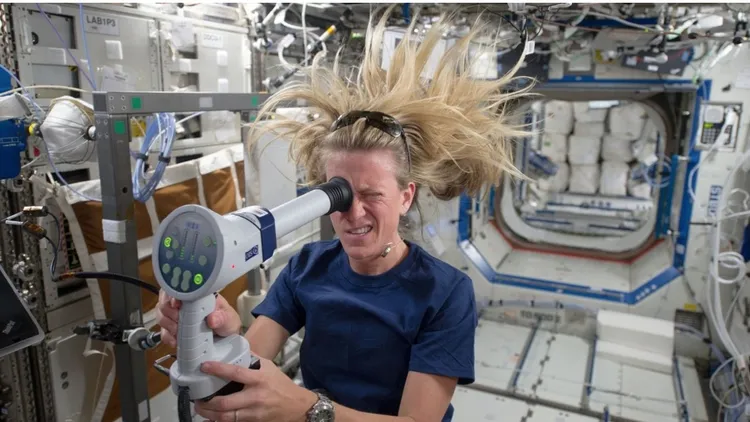
Astronauts' lower eyelids rise during microgravity due to changes in fluid distribution and tissue elasticity. This phenomenon, known as reverse ptosis, can lead to alterations in cornea shape, reduced visual field, and diminished visual acuity. The study, conducted by researchers from Australia, Germany, New Zealand, and Germany, analyzed 115 NASA photographs of 13 astronauts and found that MRD2, the distance from the center of the cornea to the lower eyelid, decreased by an average of 1 mm.
The majority of the astronauts surveyed exhibited changes greater than 1 mm, similar to those observed in astronauts after short-term parabolic flights. The exact mechanisms behind reverse ptosis are still unclear, but two main theories have been proposed: cephalad fluid shift and elastic recoil of facial tissues. The findings highlight the need for further research on the health implications of extended missions to the Moon, Mars, and beyond.
Written by urgent.news from Universe Today's reporting — not their text. Machine-written — may contain errors; check the original before relying on it.