What happens when private equity owns your childcare?
Affordability is the top political problem of the moment, and lawmakers in both parties have increasingly blamed large investors for buying up housing, hospitals, and other staples families can’t do without, while jacking up prices and degrading quality. Earlier this year, Sen. Jeff Merkley (D-OR), who has backed bills on both fronts, turned his attention to […]
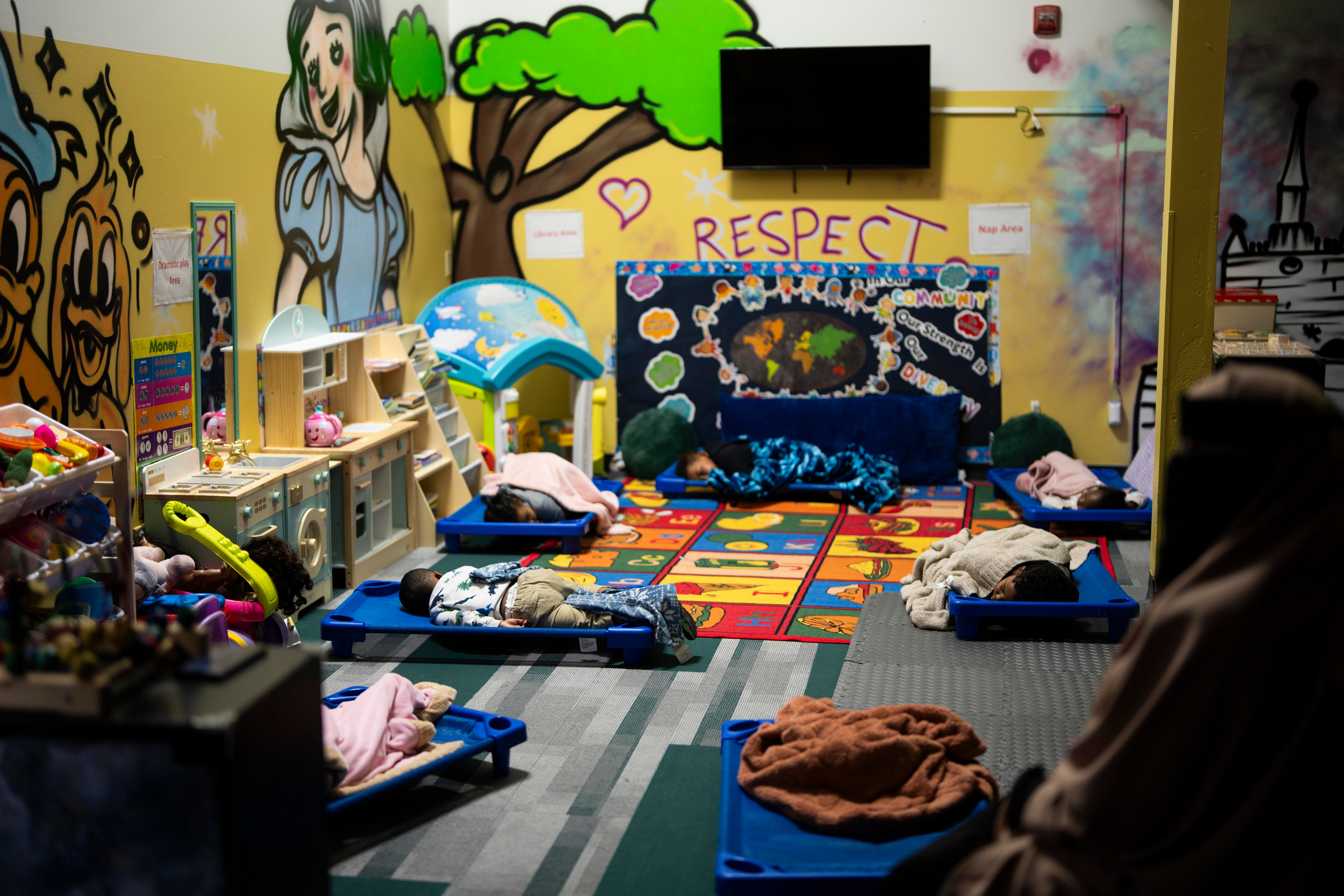
Affordability is currently the most pressing political issue, and lawmakers from both parties have increasingly blamed private equity investors for driving up prices and degrading the quality of essential services like housing and healthcare. Recently, Sen. Jeff Merkley (D-OR), who has previously supported bills addressing both housing and childcare issues, turned his focus to childcare affordability.
Merkley requested extensive information from the two largest private-equity-owned childcare companies in the nation, KinderCare Learning Companies and Learning Care Group, examining aspects such as board meeting minutes, subsidy totals, staffing ratios, dividend records, and investment memos submitted during acquisitions.
The federal investigation aligns with warnings from national childcare advocacy groups for years, expressing concerns that private equity, known for acquiring businesses with the intention of quick turnover, should not be involved in the sector. In 2022, childcare expert Elliot Haspel argued in The New Republic that private-equity owned childcare chains ultimately prioritize investor profits over their impact on families and communities.
In 2024, a report by the Open Markets Institute, National Women’s Law Center, and Community Change warned that private equity-owned centers might not only seek to exploit public funding but also delay necessary reforms to increase their market share and potentially harm families in the process.
In response to the growing concern, several states have introduced or passed legislation addressing the ownership structure of childcare providers. These include caps on the amount of public funding large for-profit chains can receive and attachment of specific conditions to public dollars allocated for these providers alone. A coalition of national advocacy groups also published model state legislation based on these state experiments.
However, a forthcoming study conducted by researchers Jessica Brown from the University of South Carolina and Chris Herbst from Arizona State University offers a more nuanced perspective on the issue.
Brown and Herbst conducted a systematic analysis of how far private equity has actually spread throughout the American childcare industry. Their findings reveal that private-equity ownership within the childcare sector has remained relatively stable at around 10% since 2010, with no significant growth. Moreover, the researchers discovered that private equity is not present in all areas, with the majority of private-equity childcare centers situated in only 5% of US counties, primarily clustered in metropolitan areas such as Phoenix, Las Vegas, Denver, Atlanta, and northern Virginia.
Additionally, these centers have been operating for an average of 18 years, which is longer than other chains operating in the market. Furthermore, despite facing criticism, these private-equity owned centers have shown a trend of adding staff between 2021 and 2024, in contrast to other chains that have reduced their workforce during the same period.
Although the researchers have several questions and areas that require further investigation, their findings suggest that the presence of private equity in childcare is not necessarily the primary reason for its unaffordability. The study indicates that private equity providers, like other large chains, do not always prioritize profit over the well-being of the families and communities they serve.
In fact, private equity-owned centers are less likely to rely on public subsidies (70% compared to 78% for other large chains) but have a higher overall quality rating. It is also worth noting that large chains, regardless of ownership, tend to locate in wealthier areas with a higher concentration of college-educated families. Conversely, private-equity providers seem more drawn to states with less stringent staffing rules and regions with tight childcare markets.
In summary, the new study conducted by Brown and Herbst provides a more balanced perspective on the impact of private equity in the childcare sector. While it acknowledges concerns about the prioritization of investor profits, it also highlights that private-equity owned centers do not uniformly provide low-quality care or hinder accessibility for families who need them most.
This nuanced analysis complicates the existing narrative and leaves room for further research to fully understand the relationship between private equity, childcare quality, and affordability.
Written by urgent.news from Vox's reporting — not their text. Machine-written — may contain errors; check the original before relying on it.