To Build a Moon Base, NASA First Needs Lunar GPS
As NASA prepares for a permanent presence on the lunar surface, it’s developing a new navigation system to keep track of astronauts, spacecraft, and rovers. Discover more about it.
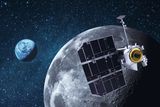
NASA's ambitious plans for establishing a lunar base in the near future have led to a focus on developing a lunar GPS system. Projected to begin operations around 2032, the Moon Base will accommodate astronauts for extended stays, complete with habitats, power systems, transportation, and infrastructure. To ensure smooth operations and prevent collisions among human activity, autonomous vehicles, and spacecraft, NASA is working on a system of communications and navigation services akin to Earth's GPS.
On Earth, the Global Positioning System (GPS) and similar constellations like Galileo allow smartphones and other devices to pinpoint their location with remarkable accuracy. However, on the moon, located about 240,000 miles away from Earth, the signals from these systems become weakened and harder to detect. NASA and the Italian Space Agency have already made strides in this area with the Lunar GNSS Receiver Experiment (LuGRE) in 2025, which successfully acquired GPS signals from the lunar surface.
To overcome the limitations of relying solely on Earth-based GPS signals, NASA plans to construct a dedicated lunar navigation system. In early 2027, one of the agency's commercial partners, Intuitive Machines, is set to launch the first of five communication and navigation satellites into lunar orbit. These satellites will transmit signals primarily to the lunar south pole, providing tailored service to the Moon Base site.
Despite the improved quality of the signals due to the absence of atmospheric interference, NASA acknowledges that a multi-technology approach will be necessary to ensure robust lunar navigation.
In addition to the dedicated lunar GPS, Earth-based GPS signals will still be valuable where they are available, while lunar satellites can offer coverage where Earth-based signals are not. Moreover, spacecraft and surface vehicles will combine these signals with onboard sensors to determine their positions effectively. This comprehensive approach will enable mission controllers in Houston to monitor lunar activity in real-time, much like using Google Maps for navigation on Earth.
As NASA paves the way for continuous lunar residence and even sets its sights on Mars, the ability to track people and equipment will prove crucial for the success of these endeavors.
Written by urgent.news from Discover Magazine's reporting — not their text. Machine-written — may contain errors; check the original before relying on it.