The Next AI Divide Is About People — and CJ OliveNetworks Is Investing Early
As companies race to adopt artificial intelligence, the next competitive divide may not be determined solely by who has the best models or infrastructure. It could increasingly depend on who can build a broader base of people capable of understanding and applying the technology.CJ OliveNetworks is a
As businesses scramble to embrace artificial intelligence (AI), the next competitive gap may hinge more on who can cultivate a larger pool of individuals capable of grasping and deploying the technology, rather than who possesses superior models or infrastructure. CJ OliveNetworks, a South Korean IT services firm, is tackling this challenge from both technological and educational angles.
While advancing its AI transformation offerings for enterprises, the company has also invested over a decade in delivering software, data, and AI education to younger generations. These two endeavors may seem distinct at first glance, with the former serving a commercial purpose and the latter acting as a social contribution initiative.
However, they increasingly align, as AI integration into businesses hinges not only on technology but also on people equipped to comprehend and leverage it.
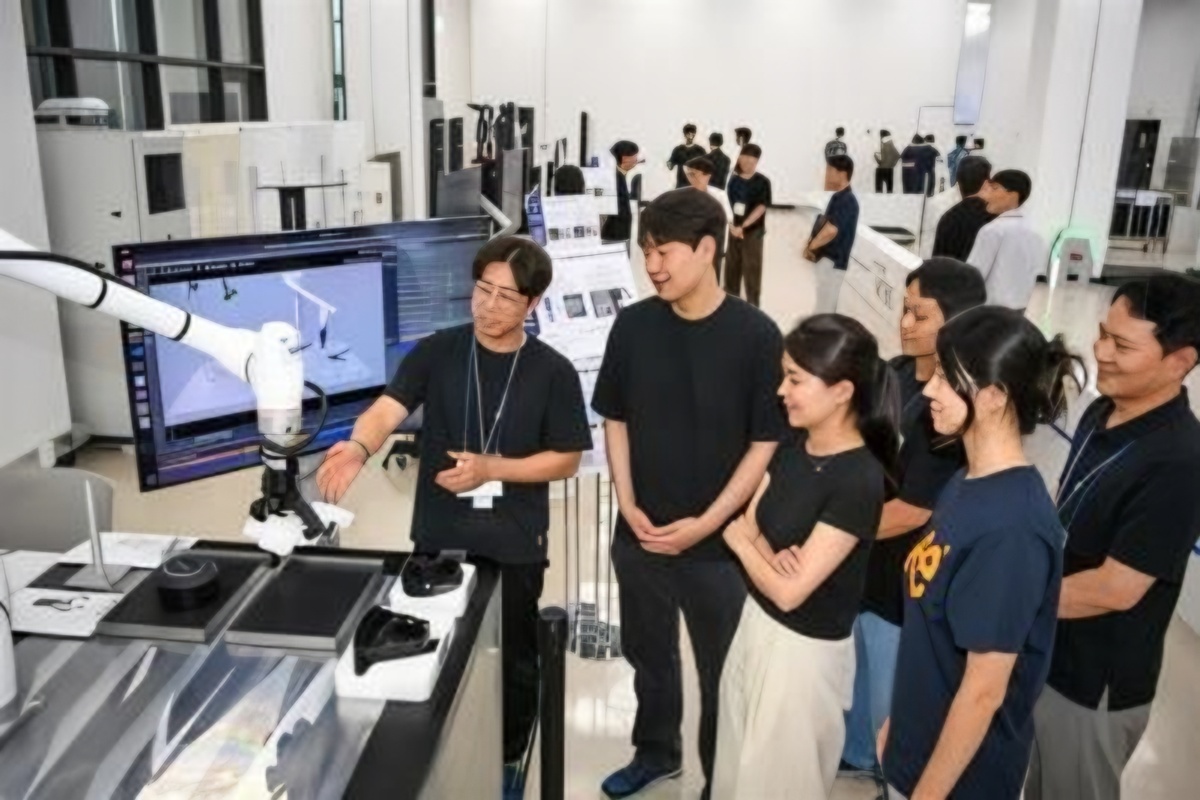
CJ OliveNetworks initiated employee-led software education programs for young individuals in 2015, evolving over time from basic coding to encompass data analysis, AI literacy, and practical problem-solving. This transformation was exemplified through the "Girls Can Do IT 2026" program, which, in collaboration with the CJ Welfare Foundation, engaged thirty middle-school girls from nine community centers in Seoul.
Instead of merely learning AI as an abstract concept, the students applied it to address a familiar issue—healthy eating. They studied nutrition, grasped the fundamentals of AI, mastered how to formulate prompts, and learned to analyze and visualize data. At a hackathon held on August 22 in Seoul, participants utilized nutritional data on ingredients, employed generative AI to devise recipes addressing real-life health concerns, prepared the dishes, and presented the data, AI methods, and reasoning behind their choices.
This format represents a significant shift in digital education, where AI is no longer merely a subject to study but a tool for solving problems. Moreover, an essential aspect of CJ OliveNetworks' approach is the involvement of its employees. Instead of relying solely on external instructors, the company leverages the technical expertise of its own workforce in youth education programs.
During the latest initiative, employees mentored students through idea development, data analysis, and generative AI usage, creating a unique form of corporate social contribution. Their technical proficiency offers young people exposure to technologies and careers they may otherwise be unaware of. The company's software education initiative has garnered several public-sector accolades, including recognitions from the Ministry of Science and ICT and Ministry of Education.
In 2025, its CJ SW Creative Camp received a Prime Minister's Commendation. As generative AI becomes deeply embedded in education and work, the digital divide may shift from basic access to computers and the internet to a more nuanced divide: whether individuals possess the skills to interrogate AI systems, interpret data, assess generated answers, and apply technology effectively.
This evolving divide holds implications for social mobility and future employment, making AI literacy increasingly relevant. Early exposure to data and AI usage in tangible problem-solving can broaden students' understanding of where digital technology is applied—spanning healthcare, food, manufacturing, logistics, and media. For girls, in particular, programs that provide direct contact with technology professionals can broaden their career prospects in fields where women remain underrepresented.
For CJ OliveNetworks, the education initiative complements its broader corporate transformation, as the company expands beyond traditional IT services into AI, big data, smart manufacturing, logistics, cloud infrastructure, and other enterprise transformation areas. While enterprise AI and youth AI education may appear unrelated, they address complementary aspects of the technological transition.
Rather than merely assessing social contribution programs based on potential commercial returns, companies must recognize that AI systems capable of transforming operations and people capable of understanding and utilizing those systems are both essential. As AI permeates everyday work and life, companies that contribute to the next phase of digital transformation may ultimately be evaluated not just by the technology they deploy but also by their efforts to disseminate the ability to use it widely.
Written by urgent.news from Korea IT Times's reporting — not their text. Machine-written — may contain errors; check the original before relying on it.