Suspects should sue police if detained beyond 48 hours – Justice Asante
Justice Edward Amoako Asante, a Supreme Court nominee, has urged suspects detained beyond the constitutional 48-hour limit to seek redress through the courts. The post Suspects should sue police if detained beyond 48 hours – Justice Asante appeared first on Ghana Business News .
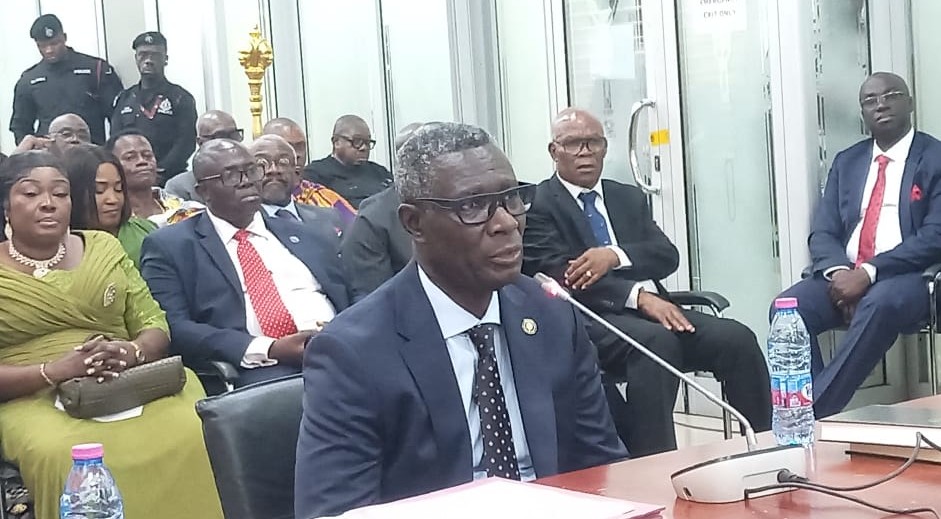
Ghanaian Supreme Court nominee, Justice Edward Amoako Asante, has advised suspects detained beyond the 48-hour constitutional limit to sue the police through the courts. Justice Asante made the suggestion during his appearance before Parliament’s Appointments Committee, where he was vetted as a nominee to the Supreme Court. He argued that the constitutional rights to bail, enshrined in Chapter Five of the 1992 Constitution, are justiciable and should be enforced via the courts.
"I have always had the notion why suspects have not sued the police for keeping them for times on end after the 48 hours," Asante stated. He maintained that the Criminal and Other Offences (Procedure) Act, 1960 (Act 30) offers a sufficient legal framework for bail, rendering the need for distinct bail legislation redundant. Asante further suggested that legal professionals should leverage the existing laws to challenge unlawful detention and seek appropriate remedies instead of introducing new legislation.
He affirmed that court-issued fines and awards against those responsible for unlawful detention would act as a deterrent and underscore the principle that law enforcement authorities cannot arbitrarily arrest and detain individuals. Regarding the integration of Artificial Intelligence (AI) in the legal sector, Justice Asante acknowledged its potential to aid lawyers and judges, particularly in legal research and data processing.
However, he stressed that AI cannot substitute human judgment and that legal professionals must critically evaluate and verify AI-generated information before utilizing it. He cautioned lawyers against excessive reliance on AI, warning that a lack of independent assessment could lead to significant professional blunders. Asante holds over 33 years of experience in legal practice and the judiciary, having begun his career as a Circuit Court Judge in 2002 and serving as High Court Judge before his appointment to the Court of Appeal in 2020.
He has also held the positions of President of the ECOWAS Court of Justice from 2018 to 2024 and was elected to the Advisory Committee of the United Nations Human Rights Council in 2025.
Written by urgent.news from Ghana Business News's reporting — not their text. Machine-written — may contain errors; check the original before relying on it.