Streit ums EU-Geld: Die „Sparsamen“ in der EU kämpfen um Einsparungen
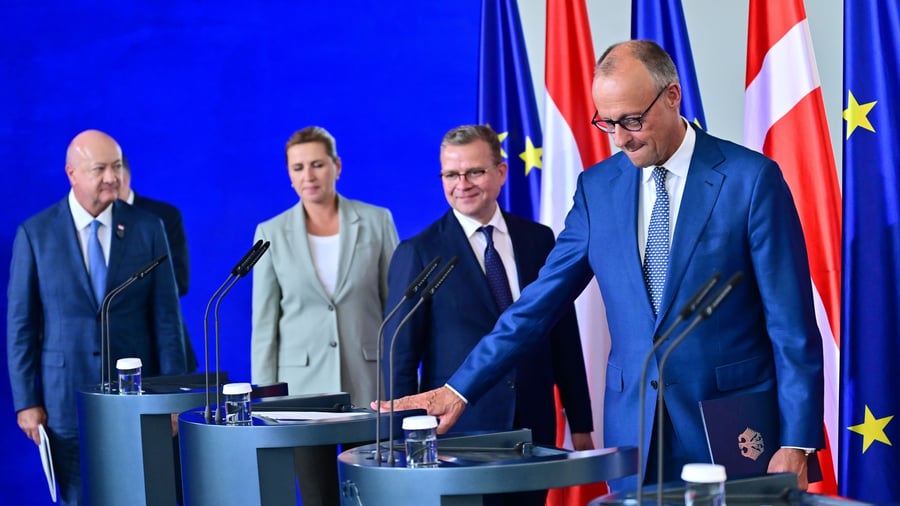
Im Kanzleramt ist es zu einem Mini-EU-Gipfel gekommen. Deutschland und andere Länder wollen bei schwierigen Verhandlungen mit einer Stimme sprechen. Der Rotstift soll her.
The debate over EU funds centers on a staggering figure of hundreds of billions of euros, with reaching an agreement deemed extremely difficult. Chancellor Friedrich Merz (CDU), alongside five other European leaders, is forming an alliance to oppose plans for significant increases to the long-term EU budget. This group, comprising Germany, the Netherlands, Denmark, Austria, Finland, and Sweden, asserts that the budget must be reduced by several hundred billion euros compared to the Commission's proposal.
Merz emphasized that these cuts must affect all areas. All parties agreed to present a unified stance in Brussels discussions, stating that the EU budget must remain fiscally viable. The coalition of "Sparers" rejects the current budget proposal of the EU Commission, deeming it unacceptable. The primary goal is to reach a compromise before the end of the year, ahead of the French presidential election.
While Merz reiterated the target deadline of 2026, he added, "It doesn't have to be, but it would be good if we succeed." The European Commission proposes a budget of around 1.76 trillion euros in inflation-adjusted terms (2025 prices). Germany, as the largest economy in the EU, bears the heaviest contribution. Merz explained that they are essentially the major contributors to the European budget.
The group also finances a significant portion of the aid for Ukraine. The current Commission budget proposals anticipate a 60% increase, which Merz described as "unaffordable" in times of budget consolidation across member states. Austrian Chancellor Christian Stöcker argued that a 60% rise would be highly noticeable in Austria.
He criticized the idea of discussing the largest budget in history while experiencing budget cuts at home. The group's priorities include security and defense, competitiveness, migration, and sovereignty. They oppose a new common debt issuance, stating it is not a solution to budgetary challenges and does not represent an alternative to structural reforms.
The EU budget is one of the most politically sensitive issues in Brussels, set for seven years, currently negotiating the budget for 2028-2034. It is primarily financed through a share of the member states' gross national income, with additional revenue from "own resources," such as tariffs on imports from non-European countries.
Discussions also focus on whether new own resources should be introduced and, if so, what form they might take. Chancellor Merz has been criticized for his approach to budget cuts, with Green/EFA budget spokesman Rasmus Andresen accusing him of being destructive to Europe.
Written by urgent.news from Handelsblatt's reporting — not their text. Machine-written — may contain errors; check the original before relying on it.