Scientists link Nepal flood to glacier collapse
Scientists link the devastating Nepal flood to a glacier collapse, killing over 160 people. Climate change may increase instability in Himalayan glaciers. Read More: https://punchng.com/scientists-link-nepal-flood-to-glacier-collapse/

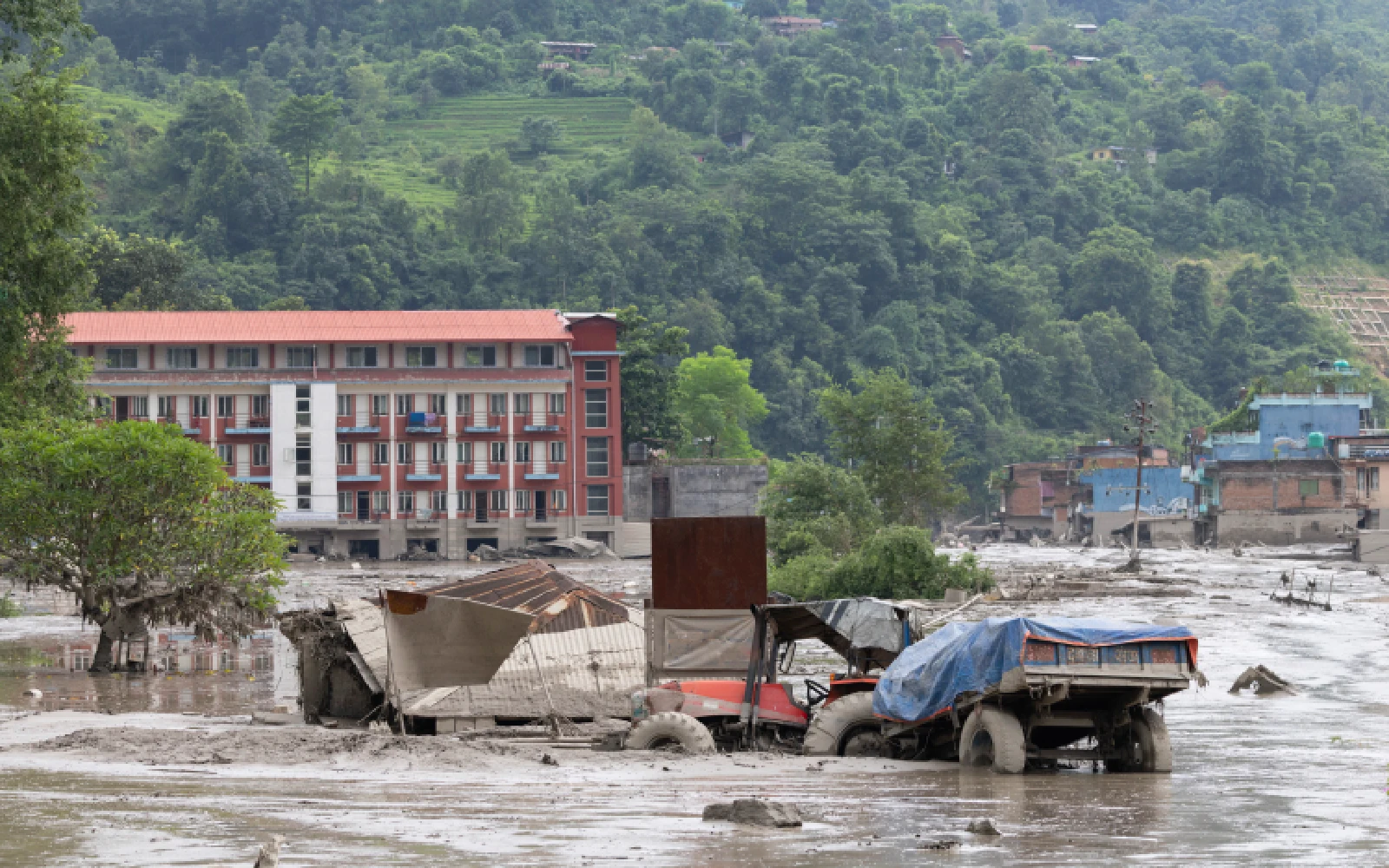
Scientists assert a glacier collapse likely instigated the catastrophic flash flood that ravaged sections of Nepal and Tibet, resulting in over 160 fatalities and leaving hundreds missing. The catastrophe occurred on Wednesday following a substantial chunk of ice and rock reportedly dislodging from a glacier situated near Langtang Lirung in Nepal’s Himalayas.
Satellite imagery analyzed by experts indicates the mass of ice and debris plummeted from elevated altitudes into a valley, generating a potent wave that inundated the Lhende Khola river. The abrupt wave conveyed substantial volumes of water, mud, rocks, and debris downstream, ravaging communities and inflicting damage to roads, bridges, and hydropower facilities along the Nepal-China frontier.
Initial indications suggested an earthquake might have instigated a landslide. Nevertheless, the US Geological Survey subsequently clarified that the seismic signal detected during the incident was generated by the collapse of glacial ice and rock and the resultant debris flow, rather than a standard earthquake.
According to reports from The BBC on Thursday, scientists examining the event posit the collapse may have commenced on the slopes of Langtang Lirung, approximately 15 kilometers from the region where the flooding inflicted extensive destruction. The force of the falling ice and rock was formidable, generating seismic energy comparable to a magnitude 5.2 event.
The precise cause of the glacier's collapse remains uncertain. However, scientists caution that rising temperatures are rendering Himalayan glaciers and adjacent mountain slopes increasingly vulnerable. Climate change is causing glaciers to diminish and permafrost, permanently frozen ground that aids in stabilizing steep mountain landscapes, to thaw.
Experts contend these alterations can amplify the probability of glacier collapses, landslides, and other cascading disasters. Scientists emphasize that it would be premature to attribute Wednesday's disaster directly to climate change. Instead, they posit that warming conditions may have heightened the instability of the glacier and surrounding terrain, rendering a catastrophic collapse more plausible.
The disaster has underscored the escalating hazards confronting communities dwelling in the Himalayas, where rapidly evolving ice and snow conditions are increasingly intersecting with steep terrain and potent rivers to produce sudden and challenging-to-predict hazards. Rescue operations persist on both sides of the Nepal-China border as authorities seek survivors and evaluate the magnitude of the devastation.
Written by urgent.news from Punch's reporting — not their text. Machine-written — may contain errors; check the original before relying on it.
This story
This is one outlet's version. Read the fullest account.