Palm extends losses to third session on weak demand, expectations of higher output
KUALA LUMPUR: Malaysian palm oil futures reversed earlier gains on Thursday, closing lower for a third straight session, pressured by sluggish export demand, expectations of higher output and weaker crude oil prices. The benchmark palm oil contract for November delivery on the Bursa Malaysia Derivatives Exchange was down 38 ringgit, or 0.78%, at 4,814 ringgit ($1,194.54) a metric ton at the…
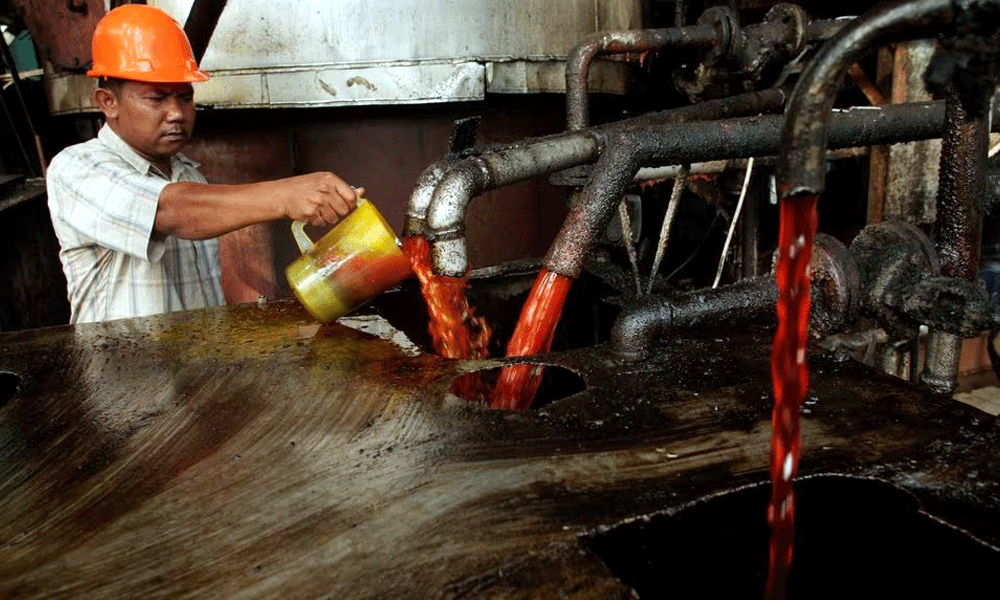
On Thursday, Malaysian palm oil futures fell for a third consecutive session, trading lower amid weak export demand, expectations of increased output, and declining crude oil prices. The benchmark palm oil contract for November delivery on Bursa Malaysia Derivatives Exchange dropped 38 ringgit, or 0.78%, to 4,814 ringgit ($1,194.54) per metric ton at the close.
Anilkumar Bagani, commodity research head at brokerage Sunvin Group, noted that weaker exports, higher-than-anticipated production, and falling energy prices have given palm oil an advantage over gas oil, while also eroding its competitiveness against soybean oil. Recent rainfall in Malaysia may boost production, but concerns persist about possible losses next year due to fire hotspots in Indonesia’s Kalimantan region.
Bagani mentioned that a rebound in Chinese vegetable oil prices lifted palm prices earlier in the day. Meanwhile, soyoil prices on Dalian rose 0.78%, while palm oil gained 0.06% on the same exchange. Chicago Board of Trade soyoil prices declined 1.86%. Palm oil prices mirror those of other edible oils, as they compete for a share of the global vegetable oils market.
Cargo surveyors estimated that Malaysian palm oil exports between August 1 and 25 fell by 11.4% to 20% compared to the previous month. Additionally, oil prices dropped on Thursday, extending a series of losses, due to anticipation that Iran and Qatar might begin negotiations to reopen the Strait of Hormuz and alleviate supply disruptions caused by the Middle East conflict.
The weakening ringgit, palm's currency, made the commodity marginally cheaper for buyers holding foreign currencies.
Written by urgent.news from Business Recorder's reporting — not their text. Machine-written — may contain errors; check the original before relying on it.
This story
This is one outlet's version. Read the fullest account.