Nepal’s deadly glacier collapse exposes climate risks across the Himalayas
A massive glacier collapse that triggered deadly flooding on the Nepal-Tibet border has exposed the growing dangers facing the rapidly warming Himalayas, where scientists say retreating ice and thawing ground are making mountain landscapes increasingly unstable.
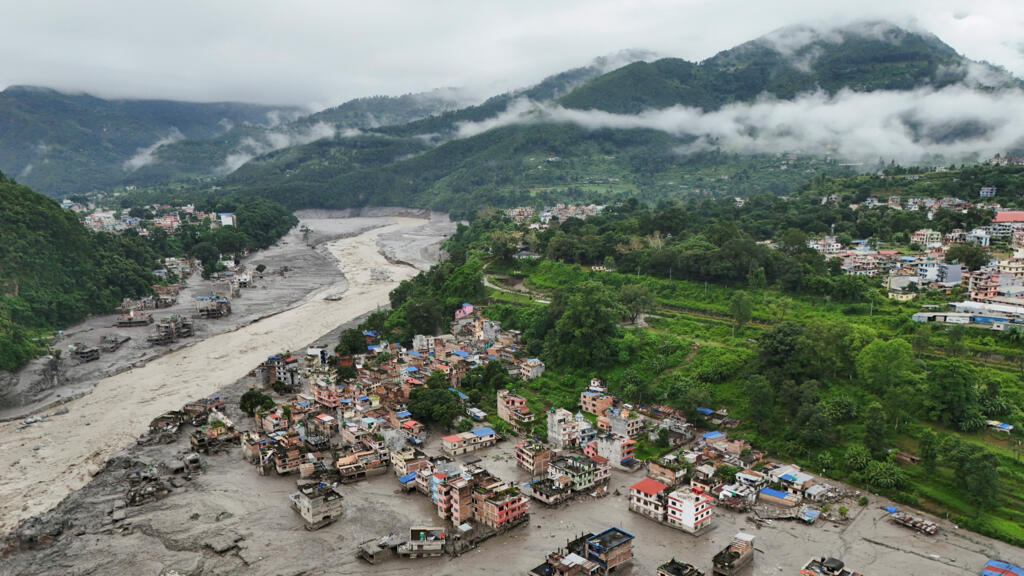
A massive glacier collapse on the Nepal-Tibet border triggered a deadly flash flood, killing at least 353 people and leaving over 1,300 missing. According to scientists, a huge chunk of a glacier broke off and temporarily dammed a river, causing the backed-up water to surge downstream with enormous force. The US Geological Survey reported a magnitude 5.2 glacier collapse, with data from nearby seismic stations, long period seismic waves, and satellite imagery.
The disaster has exposed the growing dangers facing the rapidly warming Himalayas, where retreating ice and thawing ground are making mountain landscapes increasingly unstable, RFI English reports. A geoscientist at the University of Graz in Austria, Jakob Steiner, described the glacier collapse as a huge chunk of ice coming off, with satellite imagery showing it like someone cut through the whole lower part with a huge knife.
Chinese scientists have developed a cross-border early warning system with Nepal to monitor Himalayan glacial lake outburst floods, which has issued timely alerts over the past several years, effectively preventing casualties, according to Reuters Business via SCMP and South China Morning Post. However, it remains unclear whether the system detected an anomaly before this disaster or issued an alert.
Brief written by urgent.news from RFI English, Phys.org, The Korea Times, Reuters Business via SCMP, South China Morning Post — 5 reports on this story. Machine-written — may contain errors; check the original before relying on it.