Logitech's new tool will now track if your office is too warm to work in
Spot gives you all sorts of insights about your office environment, and it now integrated with third party software.
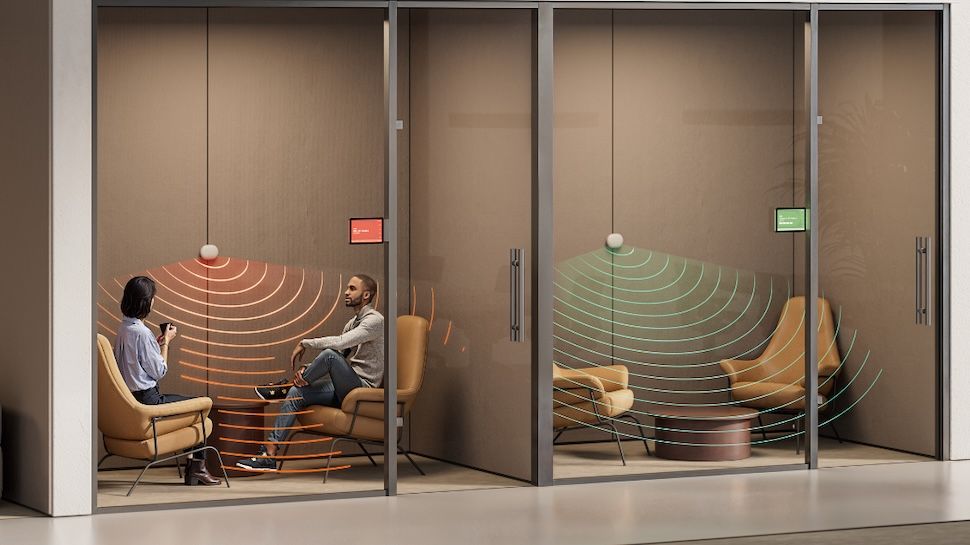
Logitech's Spot sensor has undergone significant upgrades in recent months, now equipped to track various office environmental metrics to improve worker productivity and comfort. In 2023, Logitech introduced a series of smart sensors to monitor office conditions, aiming to optimize worker productivity and comfort. The latest expansion of Spot's capabilities includes 10 new software and platform integrations with partners such as Robin and Zoom.
With these integrations, Spot acts as a central brain, feeding data into existing workplace management platforms.
Spot delves into presence and occupancy, temperature, humidity, CO2 levels, VOCs, PM, and barometric pressure. By analyzing these factors, Logitech aims to provide a comprehensive view of how rooms are utilized and their environmental conditions. The CollabOS and Sync Cloud APIs enable third-party integration, allowing Spot data to be directly connected to a company's platforms.
This connection facilitates tasks such as adjusting room allocations, identifying unused meeting rooms, automating guest check-ins, forecasting demand, and identifying environmental/comfort issues instantly. Furthermore, Spot's data can be combined with third-party software vendors' data, such as office floor plans and historical usage patterns, transforming Spot from a standalone device to an integral part of the office infrastructure.
Facilities and IT teams no longer require manual data interpretation to make informed decisions about cost-cutting and investment opportunities. Henry Levak, General Manager of Team Workspace Solutions at Logitech, emphasized that by connecting with tools customers already use daily, Spot helps build healthier, automated, and more efficient workplaces.
The Spot sensor is priced at $499, but it can also be integrated into other hardware and requires an active subscription to unlock its full connectivity potential.
Written by urgent.news from TechRadar's reporting — not their text. Machine-written — may contain errors; check the original before relying on it.