Jellyfish force partial shutdown of French nuclear plant
It is the second consecutive year that jellyfish has forced the closure of the Gravelines power station in northern France.
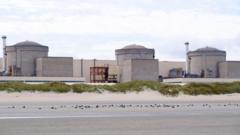
A massive influx of jellyfish in northern France has led to the partial shutdown of a nuclear reactor at the Gravelines nuclear power station. Two of the six units were shut down on Wednesday and Thursday due to the presence of jellyfish in the seawater filtration system used for cooling, reported Électricité de France (EDF). A third unit has been offline since August 10th due to the same issue, while a fourth unit was closed for an inspection.
Gravelines, located between Dunkirk and Calais in the Hauts-de-France region, is one of France's biggest nuclear power stations. The shutdown also affected units three, four, and six, while unit three had only been reconnected to the grid on August 18th after an earlier wave of jellyfish. Units one and two were operating at reduced power as a precaution.
The station, each producing 900 megawatts of power, is cooled by a canal connected to the North Sea. Several species of jellyfish are native to the area and become more active in warmer months when plankton levels rise, drawing jellyfish up from deeper waters. EDF has implemented measures to prevent jellyfish infiltration, including a partnership with fishermen to capture and release them further offshore.
Other nuclear stations, such as Torness in Scotland and Oskarshamn in Sweden, have also faced similar issues, though such cases are rare.
Written by urgent.news from BBC World's reporting — not their text. Machine-written — may contain errors; check the original before relying on it.