I Gave an AI Assistant Nine Faculties Instead of a Bigger Prompt. Here's Why.
Almost every baby-tracker app now has some kind of chat box bolted on. Ask it a question about your data, get a paragraph back.
When our newborn was three days old and desperately ill, we sought answers from four different tracking apps. However, none of them recognized the signs like the reduced colostrum intake or the unusual drowsiness. When I first tried ChatGPT, it correctly identified the issue of jaundice, albeit through trial and error. This experience demonstrated the difference between general-purpose chat tools and tools specifically designed for monitoring baby health.
General-purpose tools lack context and judgment, while specialized tools possess both the data and the necessary insights. Currently, there is a gap in the market for a product that combines the strengths of both types of tools. Simply adding AI to an existing tracker does not create the desired outcome. Such an app would not remember past information or notice patterns without being explicitly prompted.
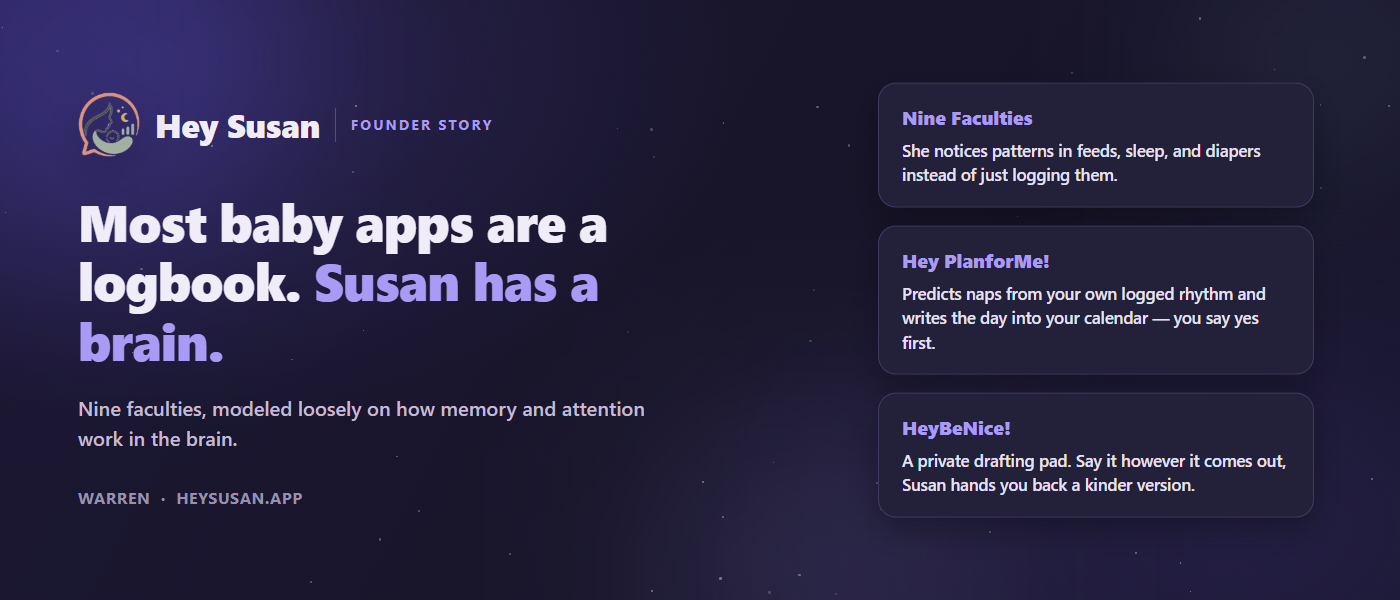
Instead, we opted for a different approach by designing the assistant with distinct faculties, each responsible for a specific task. These faculties include noticing abnormalities, building a picture of the baby's normalcy, creating a consistent model of the baby, surfacing relevant information, adapting tone based on context, remembering user preferences, maintaining alertness during critical situations, and providing a single action plan for serious issues.
By breaking down the problem into smaller, manageable components, we could develop, test, and refine each aspect individually, ensuring a more robust and reliable system. While incorporating AI can be tempting, it is crucial to prioritize safety, especially in critical situations where wrong decisions could have severe consequences.
Therefore, we implemented a separate crisis detection mechanism using pre-defined triggers that bypass the AI model entirely. The rest of the assistant operates under the assumption that it is an AI tool, not a substitute for professional medical advice. We provide clear reminders to users that the assistant is not a doctor and that they should always consult their pediatrician for any serious concerns.
Choosing the right AI model is a critical decision that impacts the assistant's performance and reliability. To mitigate the risk of relying on a single model, we evaluated multiple providers and selected the most suitable one based on safety evaluation criteria. Although this decision may not be popular due to the potential cost implications, we prioritize the well-being of users over cost-saving measures.
Written by urgent.news from HackerNoon's reporting — not their text. Machine-written — may contain errors; check the original before relying on it.