Forgotten football legends who defied apartheid
The book " The Unsung Legends of Wentworth Football", by Lorraine Richards, was recently launched at the Durban International Book Fair in uMlanga. It delves into the forgotten footballing stories of players who had “magic in their boots” but were denied their rightful place in South Africa’s football history. They flourished despite apartheid’s restrictions in the 1970s and 1980s, when Durban’s…
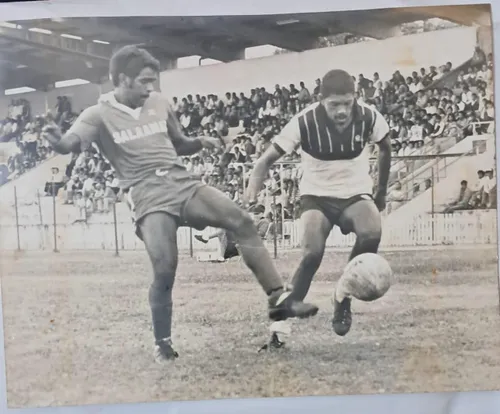
The book "The Unsung Legends of Wentworth Football," penned by Lorraine Richards, recently made its debut at the Durban International Book Fair in uMhlanga. This work sheds light on the remarkable footballing careers of players who defied apartheid's racial segregation in the 1970s and 1980s. These athletes thrived despite the restrictions imposed by the era, as Durban's non-racial football movement harnessed the power of sport as a potent instrument of resistance.
During this period, Durban transformed into a fierce battleground for non-racial sports. Anti-apartheid activists strategically utilized soccer, the most popular sport in the townships, as a potent weapon to dismantle segregation laws. The most overt act of defiance emerged from local, independent soccer associations that boldly refused to affiliate with government-sanctioned, racially segregated sports bodies.
In Durban, the Durban Central Football Association (DCFA) emerged as a legendary bastion of resistance. Driven by the principles of the South African Council on Sport (SACOS), the DCFA extended an open invitation to players of all races - African, Indian, and colored - to compete in the same league. They blatantly disregarded the Group Areas Act, a law dictating where individuals of different races could reside and socialize.
Venues like Curries Fountain and fields in Merebank and Wentworth evolved into sanctuaries of integrated play, serving as vibrant, multiracial counter-cultures hidden in plain sight of the state.
Given the frequent police raids and Group Areas inspectors' scrutiny, clubs and players had to employ ingenious tactics to maintain non-racial soccer's existence. Teams often falsified player registration documents, with an African player from a township like Umlazi or KwaMashu possibly registered under a generic or altered name to seamlessly integrate into an Indian or colored league's paperwork, thus evading detection by visiting officials.
To play for Lamontville Golden Arrows, Wellington Meth had to assume the alias Wellington Mathe. Many players clandestinely participated in two different clubs, alternating between official, segregated leagues for concealment during the week and progressive, non-racial clubs for weekend games.
No discussion of Durban's soccer resistance can overlook Curries Fountain Stadium. This sports ground was not merely a venue for athletic competition; it was a political incubator. Anti-apartheid organizations such as the Natal Indian Congress (NIC), trade unions, and the Black Consciousness Movement leveraged soccer matches at Curries Fountain as a covert platform for political organizing.
Under apartheid, political assemblies were strictly prohibited, and the Security Branch would violently suppress protests. However, the state found it challenging to legally forbid a soccer match. Activists capitalized on halftime intervals, pre-match build-ups, and post-game crowds to disseminate anti-apartheid literature, deliver political speeches, and sing liberation songs.
The iconic 1974 Frelimo Rally, commemorating Mozambique's liberation, was orchestrated under the guise of a sports gathering within this ecosystem.
Written by urgent.news from IOL's reporting — not their text. Machine-written — may contain errors; check the original before relying on it.